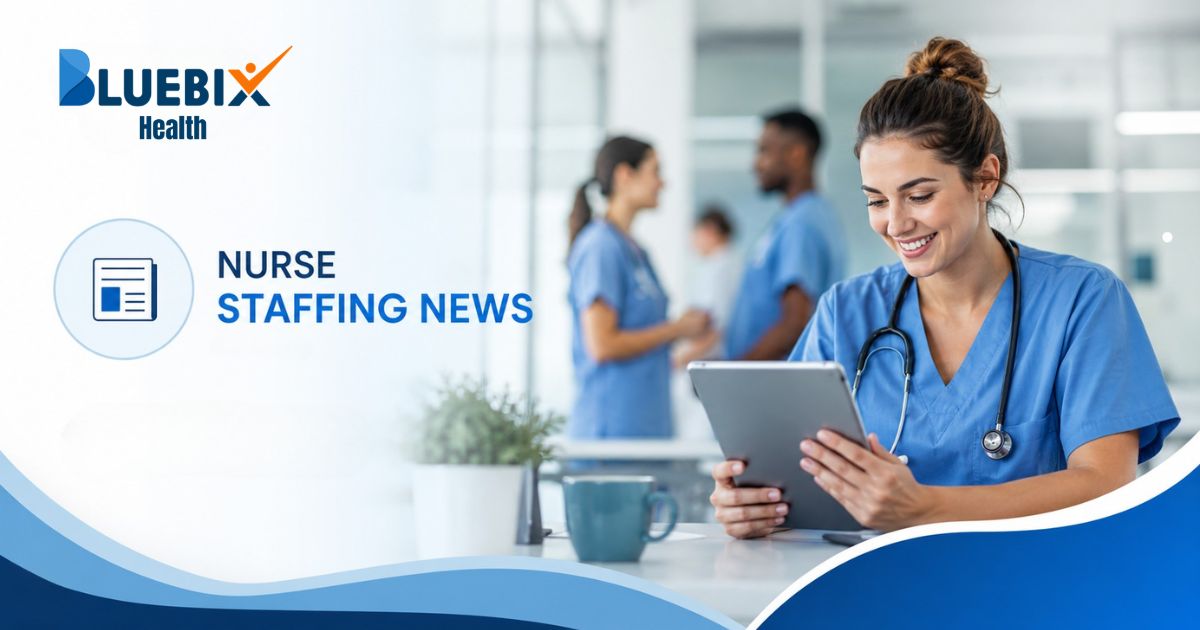
10 Nurse Staffing News Trends Shaping Healthcare in 2026
The Nurse Staffing News landscape is changing faster than many healthcare organizations expected.
Rising patient demand, an aging workforce, new technology, and changing nurse expectations are reshaping how hospitals and healthcare facilities recruit and retain talent.
Employers who stay informed about the latest staffing trends can make better hiring decisions, reduce vacancy rates, and improve patient care.
Those who ignore industry changes risk longer hiring times, higher labor costs, and increased staff burnout.
In this guide, you’ll discover the most important nurse staffing trends shaping 2026, understand what they mean for healthcare employers, and learn practical strategies to build a stronger, more resilient workforce.
Why Nurse Staffing News Matters More Than Ever in 2026
Healthcare staffing has always evolved alongside patient needs, but the pace of change in 2026 is unlike anything seen before. Hospitals, long-term care facilities, outpatient clinics, and home health providers are all competing for the same limited pool of qualified nurses.
At the same time, technological advances, workforce expectations, and changing healthcare regulations continue to reshape recruitment strategies.
For healthcare employers, following nurse staffing news is no longer optional; it’s part of effective workforce planning. Organizations that understand industry changes can respond more quickly to hiring challenges, improve recruitment outcomes, and better prepare for future staffing shortages.
The Current State of the Nursing Workforce
The nursing workforce remains under pressure. Experienced nurses continue to retire, while demand for healthcare services increases due to an aging population and the growing prevalence of chronic diseases.
Nursing schools are graduating new professionals each year, but many healthcare organizations report that the supply still struggles to meet demand, particularly in specialized care.
Healthcare employers are also facing increased competition from travel nursing agencies, outpatient facilities, telehealth providers, and private healthcare organizations that offer flexible schedules and attractive benefits.
Why Healthcare Organizations Should Follow Industry Trends
Keeping up with nursing industry updates enables healthcare leaders to make proactive decisions rather than react to staffing emergencies.
Benefits include:
- Anticipating hiring challenges before they become critical.
- Adjusting recruitment budgets more effectively.
- Improving workforce planning.
- Responding faster to changes in the healthcare labor market.
- Building stronger long-term hiring strategies.
Organizations that regularly monitor staffing trends are often better prepared for seasonal fluctuations, policy changes, and shifts in nurse hiring demand.
How Staffing Changes Affect Patient Care and Business Growth
Staffing shortages impact far more than recruitment.
When hospitals cannot fill nursing positions promptly, they often experience:
- Longer patient wait times.
- Increased nurse overtime.
- Higher burnout rates.
- Lower employee satisfaction.
- Increased recruitment costs.
- Greater turnover.
- Potential reductions in patient satisfaction.
Conversely, organizations with stable staffing levels can deliver more consistent care, improve financial performance, and strengthen their reputation as employers of choice.
2026 Healthcare Workforce Snapshot
Healthcare workforce trends in 2026 paint a clear picture: demand for skilled nurses continues to outpace supply across many specialties. While healthcare systems have improved recruitment strategies compared to previous years, competition for experienced professionals remains intense.
Understanding today’s workforce landscape helps healthcare leaders make smarter hiring decisions and develop more effective staffing plans.
Current Nursing Demand
Demand remains strongest across hospitals, specialty clinics, behavioral health centers, rehabilitation facilities, home healthcare, and long-term care organizations.
Several factors continue driving hiring needs:
- Aging patient populations.
- Higher utilization of healthcare services.
- Expansion of outpatient care.
- Growth in specialty treatment programs.
- Increased focus on preventative healthcare.
Many healthcare employers report that vacancies remain open longer than expected, particularly for experienced registered nurses.
Supply vs Demand
Although nursing schools continue to produce new graduates, the workforce supply has not fully caught up with demand.
Several contributing factors include:
- Retirement of experienced nurses.
- Burnout-related career changes.
- Geographic workforce shortages.
- Growing demand for specialized nursing skills.
- Competition among healthcare employers.
The result is a highly competitive labor market where attracting and retaining qualified nurses requires more than competitive salaries alone.
Fastest Growing Nursing Specialties
Healthcare employers continue to experience strong hiring demand in several clinical areas:
- Intensive Care Unit (ICU)
- Emergency Room (ER)
- Operating Room (OR)
- Neonatal Intensive Care Unit (NICU)
- Behavioral Health
- Oncology
- Home Health
- Case Management
These specialties often require advanced certifications and clinical experience, making recruitment more challenging.
Most Difficult Positions to Fill
Healthcare recruiters consistently identify these roles among the hardest to hire:
- ICU Registered Nurses
- Emergency Department Nurses
- Labor and Delivery Nurses
- Operating Room Nurses
- Behavioral Health Nurses
- Dialysis Nurses
- Home Health Registered Nurses
- Clinical Nurse Managers
Long hiring cycles for these positions can increase overtime costs and place additional pressure on existing staff.
Expert Insight
One of the biggest lessons from recent workforce trends is that healthcare staffing is no longer just about filling vacancies.
Successful organizations now combine technology, workforce analytics, employer branding, and flexible staffing models to create sustainable recruitment strategies. Employers that rely solely on traditional hiring methods may find it increasingly difficult to compete in today’s evolving healthcare labor market.
Trend #1: AI Is Transforming Nurse Recruitment
Artificial intelligence (AI) is no longer a future concept in healthcare recruitment—it is becoming a practical tool that helps staffing agencies and healthcare employers hire qualified nurses faster and more accurately.
As competition for nursing talent continues to grow, recruiters are using AI to automate repetitive tasks, identify stronger candidates, and improve the overall hiring experience.
It’s important to understand that AI doesn’t replace recruiters. Instead, it acts like an experienced assistant, handling administrative work so recruiters can spend more time building relationships with candidates and hiring managers.
AI Candidate Matching
Finding the right nurse involves much more than comparing resumes with job descriptions. Modern AI platforms evaluate multiple factors simultaneously to recommend candidates who are more likely to succeed in a specific role.
These factors often include:
- Clinical specialties
- Years of experience
- Required certifications
- State licensure
- Shift preferences
- Geographic location
- Availability
- Previous healthcare settings
For example, if a hospital needs an ICU nurse with trauma experience who can start within two weeks, AI can narrow thousands of profiles to a shortlist that closely matches those requirements.
Resume Parsing
Healthcare recruiters often review hundreds of resumes every week. Manually entering candidate information into recruiting systems consumes valuable time.
Resume parsing software automatically extracts key details such as:
- Contact information
- Education
- Licenses
- Certifications
- Clinical skills
- Work history
- Employment dates
This reduces manual data entry and helps recruiters respond to qualified candidates more quickly.
Automated Candidate Screening
Early-stage screening is another area where AI improves efficiency.
Recruitment platforms can automatically evaluate whether applicants meet minimum qualifications before a recruiter begins reviewing applications.
Typical screening criteria include:
- Active nursing license
- Required certifications
- Minimum years of experience
- Specialty background
- Work authorization
- Geographic availability
This allows recruiters to prioritize conversations with candidates who are most likely to meet employer requirements.
Predictive Hiring Analytics
Healthcare organizations are also using predictive analytics to improve hiring decisions.
Instead of relying only on historical recruitment data, predictive models analyze workforce trends to forecast future hiring needs.
Examples include:
- Predicting seasonal hiring demand
- Identifying departments at higher risk of turnover
- Estimating future vacancy rates
- Forecasting retirement patterns
- Planning recruitment campaigns before shortages occur
These insights help healthcare employers prepare rather than react when staffing gaps become urgent.
Benefits for Healthcare Employers
When implemented correctly, AI can improve nearly every stage of the recruitment process.
Benefits include:
- Faster time-to-hire
- Better candidate matching
- Reduced administrative workload
- Improved recruiter productivity
- More consistent hiring decisions
- Lower recruitment costs
- Better candidate experiences
Healthcare organizations that combine AI with experienced recruiters often build stronger, more efficient hiring processes.
Common Mistakes to Avoid When Using AI
While AI offers many advantages, it should never become the sole decision-maker.
Avoid these common mistakes:
- Relying entirely on automated recommendations
- Ignoring recruiter judgment
- Failing to review AI-selected candidates manually
- Using outdated or incomplete candidate data
- Neglecting bias monitoring and compliance
The best recruitment strategies combine technology with human expertise. AI can accelerate hiring, but experienced recruiters remain essential for evaluating cultural fit, communication skills, and long-term potential.
Trend #2: Travel Nursing Is Becoming More Specialized
Travel nursing remains one of the most flexible staffing solutions in healthcare, but the market has evolved significantly. Rather than hiring general travel nurses for broad coverage, many healthcare organizations now seek professionals with specialized clinical expertise.
This shift reflects the increasing complexity of patient care. Hospitals need nurses who can contribute immediately with minimal onboarding, particularly in high-acuity departments.
Growth in Specialty Travel Nurses
Today’s travel nurse assignments increasingly focus on specialty care rather than general medical-surgical units.
Healthcare employers are actively recruiting travel nurses with experience in:
- Critical care
- Trauma services
- Surgical care
- Neonatal care
- Behavioral health
- Oncology
- Cardiac services
- Dialysis
These professionals often possess advanced certifications that allow them to integrate quickly into specialized clinical teams.
High-Demand Clinical Areas
Several nursing specialties continue to experience particularly strong demand.
ICU
Intensive Care Units require nurses skilled in caring for critically ill patients, managing ventilators, and responding to rapidly changing conditions.
ER
Emergency departments value nurses who can remain calm under pressure while making fast, accurate clinical decisions.
OR
Operating Room nurses support surgical teams by maintaining sterile environments, preparing equipment, and ensuring patient safety throughout procedures.
NICU
Neonatal Intensive Care Units require highly trained nurses who care for premature and critically ill newborns.
Behavioral Health
Behavioral health nurses remain in high demand as healthcare systems continue expanding mental health services and crisis intervention programs.
Why Hospitals Still Depend on Travel Nurses
Although permanent hiring has gained momentum, travel nurses continue to fill essential workforce gaps.
Healthcare employers often rely on travel staffing to:
- Cover seasonal patient surges
- Replace employees on leave
- Support facility expansions
- Fill urgent vacancies
- Maintain safe nurse-to-patient ratios
- Recruit specialized clinical talent
Travel nurses provide flexibility without requiring long-term employment commitments.
Employer Takeaways
Healthcare leaders should think strategically when using travel staffing.
Best practices include:
- Reserve travel nurses for specialized or urgent needs.
- Balance travel staffing with permanent workforce growth.
- Build relationships with trusted healthcare staffing agencies.
- Plan for future workforce needs rather than waiting for staffing shortages.
A blended workforce strategy often delivers the best balance between flexibility, continuity of care, and financial sustainability.
Trend #3: Permanent Hiring Is Making a Strong Comeback
Following years of heavy reliance on temporary staffing, many healthcare organizations are shifting their focus back toward permanent nurse recruitment.
While travel nurses continue to play an important role, hospitals increasingly recognize the long-term value of building stable, engaged clinical teams.
Permanent employees often develop stronger relationships with patients, collaborate more effectively with colleagues, and contribute to a more consistent workplace culture.
Why Hospitals Are Investing in Long-Term Staff
Healthcare employers are making permanent hiring a priority for several reasons.
Long-term employees typically provide:
- Greater continuity of care
- Lower turnover
- Improved teamwork
- Better organizational knowledge
- Stronger patient satisfaction
- Reduced onboarding frequency
Hospitals also gain greater predictability in workforce planning and scheduling when more positions are filled by permanent staff.
Permanent vs Temporary Staffing
Both staffing models serve valuable purposes, but each addresses different operational needs.
| Permanent Staffing |
Temporary Staffing |
| Long-term workforce stability | Immediate staffing flexibility |
| Stronger employee engagement | Fast response to shortages |
| Lower long-term turnover | Seasonal coverage |
| Greater organizational knowledge | Leave replacement |
| Career development opportunities | Specialized short-term expertise |
The most successful healthcare organizations rarely rely on a single model. Instead, they build a balanced staffing strategy that combines permanent recruitment with flexible workforce.
When Each Hiring Model Works Best
Permanent hiring is often the better choice when:
- Filling core nursing positions
- Building leadership pipelines
- Supporting long-term organizational growth
- Improving employee retention
- Strengthening workplace culture
Temporary staffing works best when:
- Patient census increases unexpectedly
- Employees take extended leave
- New departments open
- Specialized skills are needed for short-term projects
- Emergency staffing shortages arise
Understanding when to use each approach helps healthcare organizations control costs while maintaining high-quality patient care.
Cost Comparison
Although temporary staffing can be essential during critical shortages, overreliance may increase labor expenses over time.
Permanent hiring typically requires a higher upfront investment in recruitment and onboarding, but it often delivers better long-term value through improved retention, reduced turnover, and greater workforce stability.
Expert Insight
Rather than choosing between permanent and temporary staffing, leading healthcare organizations are creating hybrid workforce models.
By maintaining a strong permanent nursing team and supplementing it with travel, per diem, or contract professionals during periods of increased demand, employers gain the flexibility to respond to changing patient volumes without compromising care quality.
Trend #4: Nurse Burnout Continues to Influence Staffing Decisions
Nurse burnout remains one of the biggest challenges facing healthcare organizations in 2026.
While many hospitals have improved staffing levels since the peak of pandemic-related shortages, burnout continues to affect recruitment, retention, productivity, and patient care.
Healthcare leaders are realizing that hiring more nurses alone is not enough—they must also create an environment where nurses want to stay.
Think of a nursing team like the engine of an ambulance. Even the most powerful engine will eventually fail if it runs at full speed without regular maintenance. Likewise, nurses need manageable workloads, supportive leadership, and time to recover to provide their best care.
Causes of Burnout
Burnout rarely has a single cause. Instead, it develops gradually when workplace stress outweighs available support.
The most common contributors include:
- Chronic understaffing
- Mandatory overtime
- High patient-to-nurse ratios
- Emotional stress from caring for critically ill patients
- Administrative paperwork
- Limited schedule flexibility
- Insufficient recognition
- Workplace violence and safety concerns
Burnout can affect nurses at every career stage, from new graduates adjusting to clinical practice to experienced professionals managing leadership responsibilities.
Impact on Turnover
Burnout has become a major driver of nurse turnover. When employees feel overwhelmed for extended periods, they are more likely to reduce their hours, switch employers, or leave bedside nursing altogether.
High turnover creates several challenges:
- Increased recruitment costs
- Longer vacancy periods
- Greater reliance on temporary staff
- Additional pressure on remaining employees
- Loss of experienced clinical knowledge
This creates a cycle where staffing shortages contribute to burnout, and burnout leads to even greater staffing shortages.
Effects on Patient Outcomes
Burnout affects more than employee satisfaction—it can also influence patient care.
Research consistently shows that healthier work environments are associated with better clinical outcomes. When nurses are well supported, healthcare organizations often experience:
- Better communication among care teams
- Fewer scheduling disruptions
- Improved patient satisfaction
- Stronger employee engagement
- Greater continuity of care
Reducing burnout is not simply a workforce initiative; it is an investment in patient safety and organizational performance.
Strategies Hospitals Are Using
Healthcare employers are adopting several practical strategies to improve nurse well-being and retention.
Flexible Scheduling
Modern scheduling systems allow nurses to swap shifts, indicate availability, and participate in self-scheduling where appropriate. Greater schedule flexibility helps employees balance professional and personal responsibilities.
Wellness Programs
Many healthcare organizations now offer wellness initiatives such as:
- Fitness reimbursements
- Stress management workshops
- Mindfulness training
- Financial wellness resources
- Employee assistance programs
While these programs cannot eliminate workplace stress, they provide valuable support.
Better Leadership
Frontline managers have a significant influence on nurse satisfaction. Organizations increasingly invest in leadership development to help managers improve communication, recognize employee achievements, and resolve workplace challenges more effectively.
Mental Health Support
Mental health resources have become an essential part of workforce planning.
Examples include:
- Confidential counseling services
- Peer support groups
- Burnout assessments
- Crisis intervention resources
- Resilience training
Expert Insight
Hospitals that successfully reduce burnout often treat employee well-being as a long-term operational strategy rather than a short-term initiative.
Organizations that listen to staff feedback, regularly measure engagement, and respond with meaningful improvements are more likely to retain experienced nurses and build resilient clinical teams.
Trend #5: Credential Verification Is Becoming Faster Through Automation
Hiring a qualified nurse involves much more than reviewing a resume. Every candidate must meet licensing, certification, and compliance requirements before providing patient care.
Traditionally, this verification process required significant manual effort, often delaying hiring decisions.
In 2026, automation is helping healthcare organizations complete credential verification more quickly, improve accuracy, and reduce administrative workload.
Why Compliance Matters
Healthcare compliance protects both patients and employers. Verifying professional credentials ensures that nurses meet legal and clinical standards before beginning work.
A comprehensive compliance process typically includes verifying:
- Active nursing licenses
- Specialty certifications
- Educational qualifications
- Employment history
- Background checks
- Immunization records
- Required clinical training
Missing or expired credentials can delay onboarding and increase organizational risk.
Digital Credential Management
Instead of relying on spreadsheets or paper files, many healthcare organizations now use centralized digital platforms to manage workforce credentials.
These systems allow recruiters and compliance teams to:
- Store documents securely
- Access credential records instantly
- Monitor expiration dates
- Generate compliance reports
- Reduce paperwork
Having all documentation in one secure location also simplifies internal audits and regulatory reviews.
Automated License Tracking
One of the biggest improvements is automated license monitoring.
Rather than manually checking each nurse’s license status, software can:
- Track renewal dates
- Send automatic reminders
- Alert recruiters to expired licenses
- Update compliance dashboards
- Reduce manual follow-up
This proactive approach helps organizations avoid last-minute staffing disruptions caused by expired credentials.
Benefits for Recruiters
Automation allows recruiters to focus more on candidate relationships rather than on administrative tasks.
Key advantages include:
- Faster onboarding
- Reduced manual work
- Improved compliance accuracy
- Better audit readiness
- Lower risk of documentation errors
- Shorter hiring timelines
Expert Insight
Credential automation does not replace compliance professionals. Instead, it strengthens their work by reducing repetitive administrative tasks and allowing more time for quality assurance.
Faster verification also improves the candidate experience, helping employers secure top nursing talent before competitors do.
Trend #6: Data-Driven Workforce Planning Is Replacing Guesswork
For many years, workforce planning relied heavily on experience, intuition, and historical staffing patterns. While professional judgment remains valuable, today’s healthcare organizations increasingly use real-time data to make smarter staffing decisions.
Data-driven workforce planning helps employers understand not only where they are today but also where staffing needs are likely to develop tomorrow.
Imagine driving a car using only the rearview mirror. You could see where you’ve been, but not what lies ahead. Workforce analytics provides a windshield, allowing healthcare leaders to anticipate challenges rather than simply react to them.
Predictive Staffing Models
Predictive staffing uses historical workforce data, patient trends, and operational information to estimate future staffing requirements.
Healthcare organizations can forecast:
- Seasonal hiring demand
- Patient census fluctuations
- Department growth
- Retirement trends
- Recruitment needs
- Overtime risk
These forecasts support proactive hiring instead of emergency recruitment.
Scheduling Analytics
Scheduling software now provides valuable insights into workforce utilization.
Healthcare managers can monitor:
- Shift coverage
- Overtime patterns
- Staff availability
- Scheduling conflicts
- Productivity trends
- Leave requests
By analyzing these metrics, organizations can distribute workloads more fairly and improve operational efficiency.
Workforce Forecasting
Long-term workforce forecasting supports strategic planning.
Instead of asking, How many nurses do we need today? healthcare leaders are asking:
- How many nurses will we need next quarter?
- Which specialties are becoming harder to recruit?
- Which departments face the greatest retirement risk?
- Where should recruitment budgets increase?
These questions help organizations prepare for future workforce demands rather than reacting after shortages occur.
Reducing Overtime Costs
Overtime remains one of the largest controllable labor expenses in healthcare.
Workforce analytics helps employers identify patterns that contribute to excessive overtime, such as:
- Persistent vacancies
- Uneven scheduling
- Seasonal patient surges
- High absenteeism
- Department-specific staffing shortages
Addressing these issues early can reduce labor costs while supporting employee well-being.
Improving Patient Coverage
The ultimate goal of workforce planning is to ensure patients receive timely, high-quality care.
When staffing decisions are supported by accurate data, healthcare organizations can:
- Match staffing levels with patient demand
- Reduce shift gaps
- Improve continuity of care
- Increase scheduling flexibility
- Enhance patient satisfaction
- Support safer clinical environments
Rather than simply filling vacancies, employers can build staffing strategies that align with both operational goals and patient needs.
Expert Insight
Healthcare organizations that combine workforce analytics with experienced leadership gain a significant competitive advantage.
Data highlights trends and opportunities, while human judgment provides context for informed decision-making. Together, they create a more agile, efficient, and resilient workforce capable of adapting to the rapidly changing healthcare landscape.
Trend #7: Healthcare Staffing Agencies Are Offering More Technology Than Ever
Healthcare staffing agencies have evolved far beyond simply connecting employers with available nurses.
In 2026, the most successful agencies function as technology partners, combining experienced recruiters with advanced recruitment platforms that speed up hiring, improve candidate quality, and reduce administrative work.
For healthcare employers facing ongoing staffing shortages, choosing a technology-enabled staffing partner can significantly improve recruitment outcomes.
Imagine trying to build a house with only a hammer. You could finish the job, but it would take much longer. Modern staffing technology gives recruiters the complete toolbox they need to hire faster and more accurately.
Modern Staffing Platforms
Today’s staffing platforms bring every stage of recruitment into one centralized system.
Rather than managing separate spreadsheets, emails, and paper files, recruiters can oversee the entire hiring process from a single dashboard.
Modern platforms often include:
- Job posting management
- Candidate sourcing
- Interview scheduling
- Credential tracking
- Compliance monitoring
- Offer management
- Reporting dashboards
This centralized approach improves collaboration while reducing manual work.
Applicant Tracking Systems (ATS)
An Applicant Tracking System (ATS) serves as the foundation of modern healthcare recruitment.
Instead of manually organizing hundreds of applications, recruiters can automatically:
- Track candidate progress
- Search resumes quickly
- Schedule interviews
- Manage hiring stages
- Store candidate records
- Generate recruitment reports
For healthcare organizations with multiple open positions, an ATS improves organization and accelerates decision-making.
Candidate Relationship Management (CRM)
Recruitment does not end when a candidate accepts an offer.
A Candidate Relationship Management (CRM) system helps recruiters maintain long-term relationships with healthcare professionals.
Recruiters can:
- Build talent communities
- Record candidate preferences
- Track communication history
- Reconnect with previous applicants
- Share future job opportunities
This creates a stronger talent pipeline and reduces future sourcing efforts.
AI Talent Matching
Artificial intelligence enhances recruitment by identifying candidates whose skills closely match job requirements.
Instead of relying only on keyword searches, AI evaluates multiple factors such as:
- Clinical experience
- Certifications
- Specialty expertise
- Geographic location
- Availability
- Employment history
This improves match quality while reducing recruiter workload.
Automated Communication
Healthcare candidates often receive multiple job offers within days.
Automated communication helps employers respond quickly through:
- Interview reminders
- Follow-up emails
- Application updates
- Document requests
- Offer notifications
- Onboarding instructions
Faster communication improves the candidate experience and reduces the risk of losing qualified nurses to competing employers.
Employer Benefits
Technology-enabled staffing agencies help healthcare organizations:
- Reduce time-to-hire
- Improve candidate quality
- Strengthen compliance
- Increase recruiter productivity
- Build long-term talent pipelines
- Improve hiring transparency
- Deliver a better candidate experience
Expert Insight
Technology alone cannot solve recruitment challenges. The strongest staffing agencies combine experienced healthcare recruiters with intelligent technology. This balance allows employers to benefit from faster hiring while still receiving personalized recruitment support and industry expertise.
Trend #8: Employer Branding Has Become a Competitive Advantage
Healthcare employers once competed primarily on salary and benefits. Today, nurses evaluate much more than compensation before accepting a position. They want to understand what it feels like to work for an organization.
Employer branding has become one of the most influential factors in healthcare recruitment because talented nurses often have multiple employment options.
A strong employer brand tells candidates, This is a place where you can build your career.
Why Nurses Choose Certain Employers
Nurses increasingly evaluate employers based on their overall work experience rather than salary alone.
Important decision factors include:
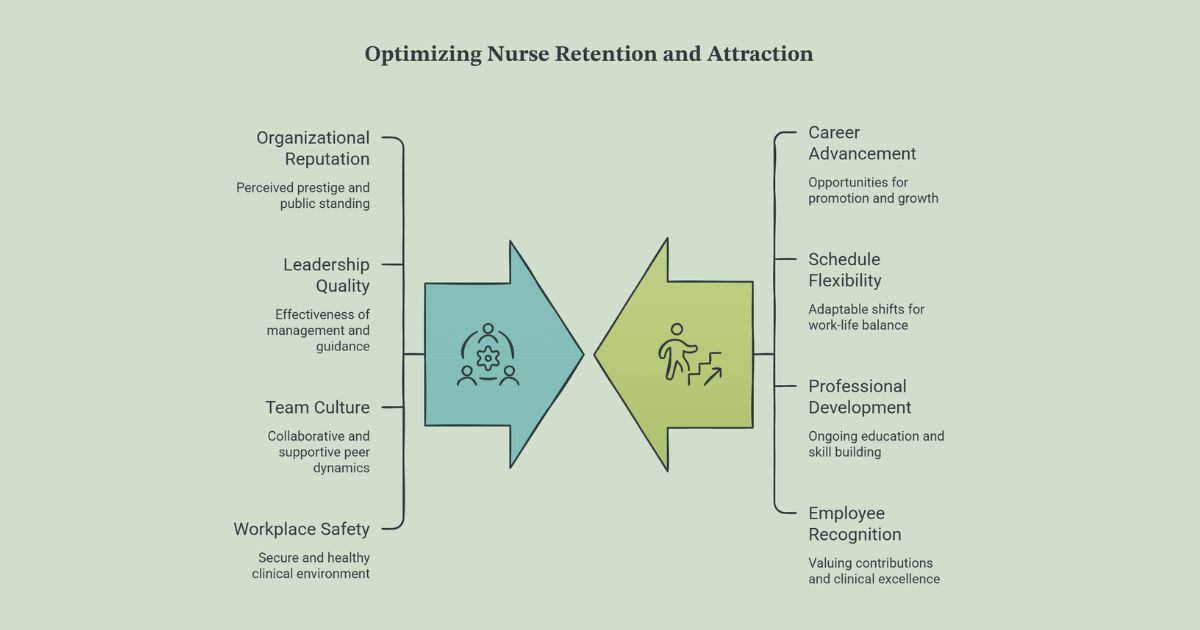
- Organizational reputation
- Leadership quality
- Team culture
- Career advancement
- Schedule flexibility
- Professional development
- Workplace safety
- Employee recognition
Organizations with strong reputations often attract more applicants before posting additional recruitment advertisements.
Importance of Career Growth
Healthcare professionals want opportunities to continue learning throughout their careers.
Employers can strengthen recruitment by offering:
- Continuing education support
- Certification reimbursement
- Leadership development
- Clinical mentorship
- Tuition assistance
- Internal promotion pathways
Career growth demonstrates a long-term investment in employees rather than simply filling vacancies.
Workplace Culture
A positive workplace culture encourages nurses to stay with an organization.
Successful healthcare employers often emphasize:
- Respectful communication
- Collaborative teamwork
- Inclusive leadership
- Employee recognition
- Shared decision-making
- Psychological safety
Healthy workplace cultures improve both retention and patient care.
Compensation Transparency
Candidates increasingly expect clear information about pay, benefits, scheduling, and career expectations before accepting interviews.
Transparent job postings help build trust and reduce hiring delays.
Online Reputation
Before applying, many nurses research employers online.
They often review:
- Employee testimonials
- Company websites
- Social media
- Job review platforms
- Professional networking sites
Managing online reputation has become an essential component of modern recruitment.
Expert Insight
Employer branding is no longer just a marketing initiative. It has become a recruitment strategy. Healthcare organizations that consistently communicate their values, culture, and employee experience often attract stronger candidates while reducing recruitment costs over time.
Trend #9: Flexible Scheduling Is Becoming a Hiring Requirement
Work-life balance has become a top priority for today’s nursing workforce. Many candidates now view flexible scheduling as a necessity rather than an optional benefit.
Healthcare employers that offer scheduling flexibility often experience higher applicant interest, improved retention, and greater employee satisfaction.
Instead of asking candidates to fit into rigid schedules, leading organizations are creating scheduling systems that better fit employees’ lives.
Self-Scheduling
Self-scheduling gives nurses greater control over their work schedules while ensuring departments maintain adequate staffing.
Benefits include:
- Improved employee satisfaction
- Reduced scheduling conflicts
- Greater schedule ownership
- Better work-life balance
- Lower administrative workload
Managers still oversee final schedules, but employees gain more input into shift selection.
PRN Staffing
PRN (as needed) staffing provides flexibility for both employers and healthcare professionals.
Healthcare organizations use PRN nurses to:
- Cover unexpected absences
- Manage seasonal demand
- Reduce overtime
- Support high-volume departments
Many nurses appreciate the flexibility PRN opportunities provide.
Per Diem Opportunities
Per diem positions allow nurses to work individual shifts without long-term scheduling commitments.
These opportunities benefit:
- Semi-retired nurses
- Parents
- Graduate students
- Nurses seeking supplemental income
- Professionals exploring different healthcare settings
For employers, per diem staffing creates an additional layer of workforce flexibility.
Work-Life Balance
Flexible scheduling supports healthier employees.
Organizations often experience improvements in:
- Employee engagement
- Job satisfaction
- Retention
- Productivity
- Team morale
Satisfied employees are also more likely to recommend their employer to other healthcare professionals.
Impact on Retention
Retention begins long before employees consider leaving.
Healthcare organizations that provide scheduling flexibility often experience:
- Lower turnover
- Reduced burnout
- Higher employee loyalty
- Better recruitment outcomes
- Stronger workforce stability
Expert Insight
Flexible scheduling should support both employees and patient care. Successful organizations combine scheduling technology with thoughtful workforce planning to create fair, balanced schedules that meet operational needs while respecting nurses’ personal lives.
Trend #10: Healthcare Recruitment Is Becoming More Candidate-Centered
Recruitment has shifted from asking candidates to adapt to employers toward creating hiring experiences that respect candidates’ time, preferences, and expectations.
Today’s nurses expect recruitment to be efficient, transparent, and responsive. Organizations that provide a positive candidate experience are more likely to secure top talent before competitors do.
Think of recruitment like welcoming guests into your home. A friendly, organized experience creates a positive first impression, while delays and poor communication can quickly discourage even the most interested visitors.
Faster Hiring Processes
Lengthy hiring timelines remain one of the biggest reasons employers lose qualified candidates.
Leading healthcare organizations are reducing delays by:
- Streamlining interviews
- Automating administrative tasks
- Accelerating credential verification
- Improving recruiter collaboration
- Making faster hiring decisions
Speed has become a competitive advantage.
Mobile Applications
Many healthcare professionals now search and apply for jobs using smartphones.
Mobile-friendly recruitment allows candidates to:
- Search positions easily
- Submit applications quickly
- Upload resumes
- Track application status
- Schedule interviews
Simplifying the application process encourages more qualified professionals to apply.
Better Communication
Candidates value timely, honest communication throughout the recruitment process.
Best practices include:
- Confirming applications promptly
- Providing interview updates
- Explaining next steps
- Offering constructive feedback when possible
- Responding quickly to candidate questions
Clear communication builds trust and strengthens an employer’s reputation.
Personalized Candidate Experience
Healthcare recruitment is becoming increasingly relationship-driven.
Recruiters personalize communication by considering:
- Career goals
- Specialty interests
- Preferred locations
- Scheduling preferences
- Long-term professional development
Personalized experiences help candidates feel valued rather than processed.
Digital Onboarding
The candidate experience continues after an offer is accepted.
Digital onboarding simplifies:
- Document submission
- Compliance paperwork
- Training assignments
- Policy acknowledgments
- Orientation scheduling
This allows new employees to begin their roles with greater confidence and fewer administrative delays.
Expert Insight
Candidate-centered recruitment benefits everyone involved. Healthcare professionals experience a smoother hiring journey, while employers build stronger reputations, improve offer acceptance rates, and reduce the time required to fill critical nursing positions.
How Healthcare Employers Can Prepare for These Nurse Staffing Trends
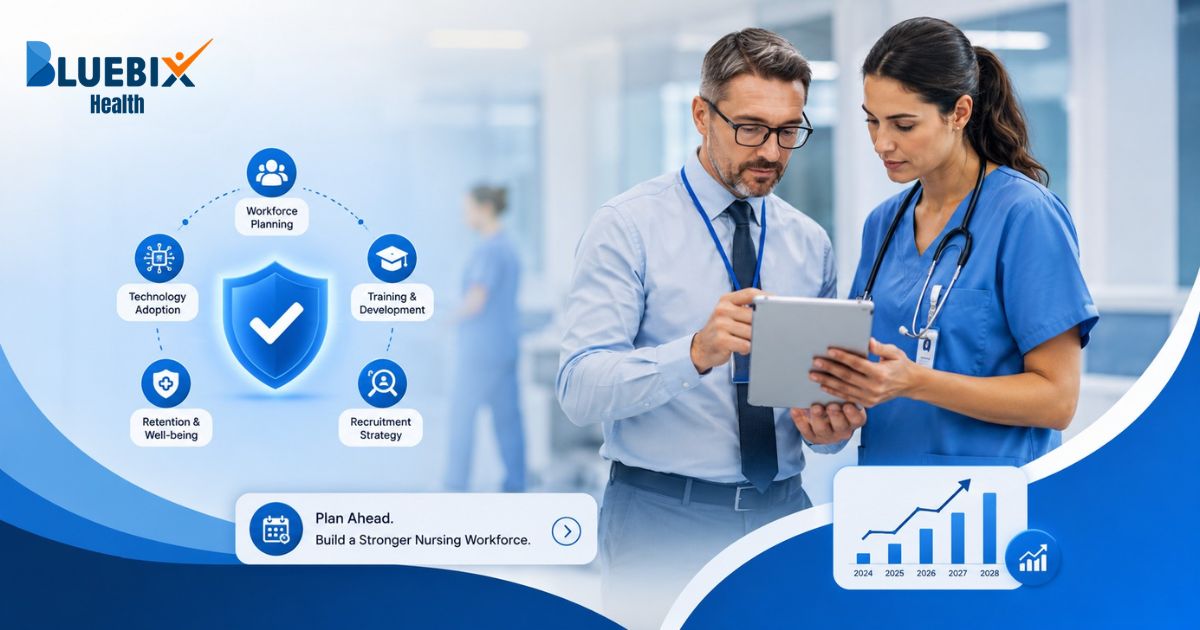
The healthcare workforce will continue evolving beyond 2026. Organizations that succeed won’t simply react to staffing shortages—they’ll prepare for them.
By combining technology, long-term workforce planning, and a strong employee experience, healthcare employers can build a more resilient nursing workforce and remain competitive in an increasingly challenging labor market.
Below are the strategies that leading healthcare organizations are adopting today.
Invest in Recruitment Technology
Modern recruitment technology helps hiring teams work smarter, not harder. Instead of spending hours on manual tasks, recruiters can focus on building relationships with qualified candidates.
Healthcare employers should consider investing in:
- Applicant Tracking Systems (ATS)
- AI-powered candidate matching
- Resume parsing software
- Automated interview scheduling
- Credential management platforms
- Recruitment analytics dashboards
Technology also provides valuable insights that support better hiring decisions and improve overall recruitment efficiency.
Build Long-Term Talent Pipelines
Waiting for a vacancy to appear is no longer an effective recruitment strategy.
Successful organizations continuously build relationships with healthcare professionals by:
- Engaging passive candidates
- Partnering with nursing schools
- Participating in career fairs
- Creating employee referral programs
- Maintaining candidate databases
- Staying connected with former applicants
A strong talent pipeline reduces hiring delays and improves access to qualified professionals when positions become available.
Strengthen Employer Branding
Your reputation influences whether qualified nurses choose your organization over another.
Healthcare employers should consistently communicate:
- Organizational values
- Career development opportunities
- Workplace culture
- Employee success stories
- Leadership support
- Community involvement
A strong employer brand attracts better candidates while improving retention.
Partner with Experienced Staffing Agencies
Even organizations with internal recruitment teams benefit from trusted staffing partners.
Experienced healthcare staffing agencies can provide:
- Access to pre-screened candidates
- Specialized recruitment expertise
- Faster hiring support
- Flexible staffing options
- Compliance assistance
- Market insights
Choosing an agency that understands healthcare recruitment can significantly reduce hiring timelines.
Improve the Candidate Experience
Every interaction influences a candidate’s decision.
Healthcare employers should aim to:
- Respond quickly to applications
- Simplify the interview process
- Maintain clear communication
- Reduce unnecessary paperwork
- Provide timely feedback
- Create smooth onboarding experiences
Candidates who feel respected throughout recruitment are more likely to accept offers and recommend the organization to others.
Monitor Workforce Data Continuously
Healthcare organizations should regularly review workforce metrics instead of relying solely on historical trends.
Key metrics include:
- Time-to-hire
- Vacancy rates
- Turnover rates
- Overtime hours
- Employee engagement
- Recruitment costs
- Offer acceptance rates
Regular workforce analysis helps employers identify potential staffing issues before they become operational challenges.
Expert Insight
The most successful healthcare organizations view recruitment as an ongoing business strategy rather than an occasional hiring activity.
By combining technology, workforce data, and people-focused leadership, employers can create a stable nursing workforce that supports both exceptional patient care and long-term organizational growth.
How BluebixHealth Helps Healthcare Organizations Stay Ahead
Finding qualified healthcare professionals quickly has become increasingly challenging. BluebixHealth helps healthcare organizations overcome these challenges by combining experienced healthcare recruiters with modern recruitment technology and a streamlined hiring process.
Rather than offering a one-size-fits-all solution, BluebixHealth works closely with each client to understand workforce needs, hiring goals, and organizational culture.
This personalized approach helps employers secure professionals who are both clinically qualified and aligned with their teams.
Verified Healthcare Professionals
Every candidate goes through a structured screening process that includes credential verification, experience review, and compliance checks before being presented to employers.
Fast Hiring Process
BluebixHealth uses technology-driven recruitment workflows to reduce hiring delays and help organizations fill critical positions faster.
AI-Powered Candidate Matching
Advanced matching tools evaluate skills, certifications, experience, location preferences, and availability to identify candidates who closely fit each position.
Flexible Staffing Solutions
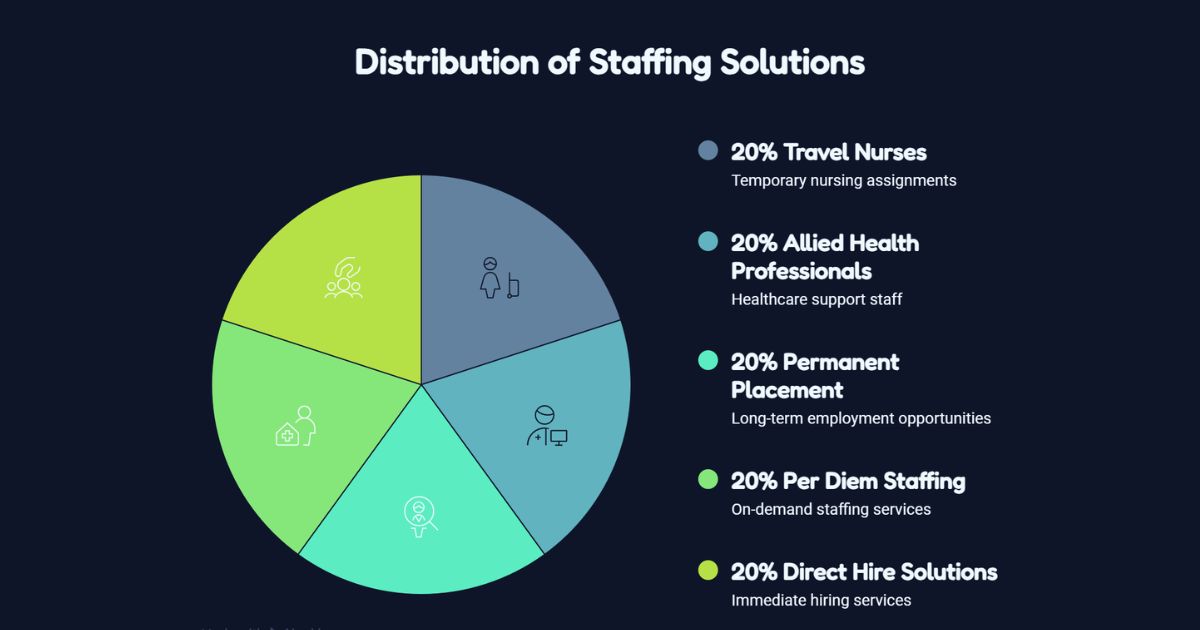
BluebixHealth supports a wide range of workforce needs, including:
- Travel Nurses
- Allied Health Professionals
- Permanent Placement
- Per Diem Staffing
- Direct Hire Solutions
This flexibility allows healthcare organizations to adapt quickly to changing patient volumes and workforce demands.
Dedicated Recruitment Support
Clients receive ongoing support from experienced healthcare recruiters who provide hiring guidance, workforce insights, and responsive communication throughout the recruitment process.
Ready to Strengthen Your Healthcare Workforce?
Whether you need one specialized nurse or an entire clinical team, BluebixHealth can help you hire faster with confidence.
Book a consultation today to discuss your staffing needs and discover a recruitment strategy tailored to your organization.
Frequently Asked Questions (FAQ)
What is nurse staffing news?
Nurse staffing news includes the latest updates on nursing shortages, hiring trends, workforce regulations, recruitment technology, travel nursing demand, compensation changes, and healthcare labor market developments. Following these updates helps healthcare employers make informed workforce decisions and prepare for future staffing challenges.
Why is nurse staffing changing in 2026?
Several factors are driving change, including an aging population, increased demand for healthcare services, nurse retirements, workforce burnout, advances in recruitment technology, and evolving employee expectations. Healthcare organizations are also investing more in workforce planning and flexible staffing models to improve long-term stability.
What are the biggest healthcare staffing trends?
Some of the most significant trends include:
- AI-powered recruitment
- Growth of specialty travel nursing
- Increased permanent hiring
- Flexible scheduling
- Employer branding
- Workforce analytics
- Automated credential verification
- Candidate-centered recruitment
- Digital onboarding
- Technology-enabled staffing agencies
Together, these trends are reshaping how healthcare organizations attract and retain qualified professionals.
Is the nursing shortage expected to continue?
Yes. Although healthcare organizations continue hiring aggressively and nursing schools are graduating new professionals, demand is expected to remain strong due to population growth, chronic disease management, and workforce retirements. The severity of shortages may vary by region and nursing specialty.
How is AI changing nurse recruitment?
AI helps recruiters automate repetitive tasks such as resume screening, candidate matching, interview scheduling, and workforce analytics. This reduces administrative work, improves hiring efficiency, and allows recruiters to focus more on building relationships with qualified candidates.
Why are travel nurses still in demand?
Travel nurses provide flexibility during seasonal demand, staffing shortages, employee leave, and specialized clinical assignments. Many hospitals rely on travel nurses to maintain safe staffing levels while continuing to recruit permanent employees for long-term workforce stability.
What staffing model is best for hospitals?
There is no single model that fits every healthcare organization. Most hospitals achieve the best results through a hybrid workforce strategy that combines permanent employees with travel nurses, per diem professionals, contract staff, and direct-hire recruitment, tailored to changing patient needs.
How can healthcare employers attract more nurses?
Healthcare organizations can improve recruitment by:
- Offering competitive compensation
- Providing flexible scheduling
- Investing in professional development
- Creating positive workplace cultures
- Simplifying recruitment
- Building strong employer brands
- Using modern recruitment technology
- Communicating clearly throughout the hiring process
These practices improve both recruitment and retention.
What role do staffing agencies play in healthcare recruitment?
Healthcare staffing agencies help employers access qualified professionals more quickly by sourcing candidates, verifying credentials, supporting compliance, and providing flexible staffing options. Many agencies also offer recruitment technology and workforce insights that improve hiring efficiency.
How can BluebixHealth help healthcare organizations hire nurses faster?
BluebixHealth combines experienced healthcare recruiters with AI-powered candidate matching, credential verification, and flexible staffing solutions. By streamlining recruitment and maintaining a network of qualified professionals, BluebixHealth helps employers reduce time-to-hire while maintaining high hiring standards.
Conclusion
The nurse staffing landscape is evolving rapidly, and healthcare organizations must adapt to remain competitive.
Throughout this guide, we’ve explored ten major trends shaping healthcare recruitment in 2026—from artificial intelligence and predictive workforce planning to flexible scheduling, employer branding, candidate-centered hiring, and technology-enabled staffing solutions.
The common thread across all these trends is clear: successful healthcare organizations are becoming more proactive.
Instead of responding to staffing shortages after they occur, they are investing in smarter recruitment technology, building long-term talent pipelines, strengthening employee experiences, and using workforce data to make informed decisions.
Organizations that embrace these changes will be better positioned to attract qualified nurses, reduce turnover, improve operational efficiency, and deliver exceptional patient care.
If your organization is looking to strengthen its workforce, partnering with an experienced healthcare staffing provider can make all the difference.
BluebixHealth combines healthcare recruitment expertise with modern technology to help employers hire verified professionals faster and more efficiently.