7 Ways Nurse Staffing Software Helps Healthcare Facilities Hire Faster
Finding qualified nurses has become one of the biggest challenges for healthcare organizations in 2026. Hospitals, healthcare staffing agencies, long-term care facilities, and home healthcare providers all face increasing competition for skilled professionals while managing strict compliance requirements and rising patient expectations.
Traditional hiring methods are no longer enough. Organizations need faster recruitment, smarter workforce planning, and better visibility into staffing operations. That’s where nurse staffing software makes a difference.
This guide explains everything you need to know before investing in nurse staffing software. You’ll learn what it is, why it matters, the essential features to look for, how leading platforms compare, common buying mistakes, future industry trends, and practical tips for choosing the right solution for your organization.
What Is Nurse Staffing Software?
Nurse staffing software is a specialized technology platform designed to help healthcare organizations recruit, manage, schedule, and retain nursing professionals more efficiently.
Instead of relying on spreadsheets, emails, and disconnected systems, healthcare employers can manage their entire workforce through one centralized platform.
Modern nurse staffing software automates many time-consuming recruitment tasks, including applicant tracking, credential verification, interview scheduling, shift management, compliance monitoring, payroll integration, and workforce reporting.
For organizations experiencing staffing shortages, this technology significantly reduces administrative work while helping recruiters hire qualified nurses faster.
Definition of Nurse Staffing Software
At its core, nurse staffing software is a healthcare workforce management solution that recruits and manages nurses and other clinical professionals.
Unlike generic recruiting tools, these platforms understand healthcare-specific requirements, such as:
- Nursing license verification
- Clinical certifications
- Credential expiration tracking
- Shift availability
- Multi-location staffing
- Compliance documentation
- Healthcare scheduling
- Candidate onboarding
Most modern platforms combine recruiting, scheduling, communication, and reporting into one cloud-based system.
How It Differs from Traditional HR Software
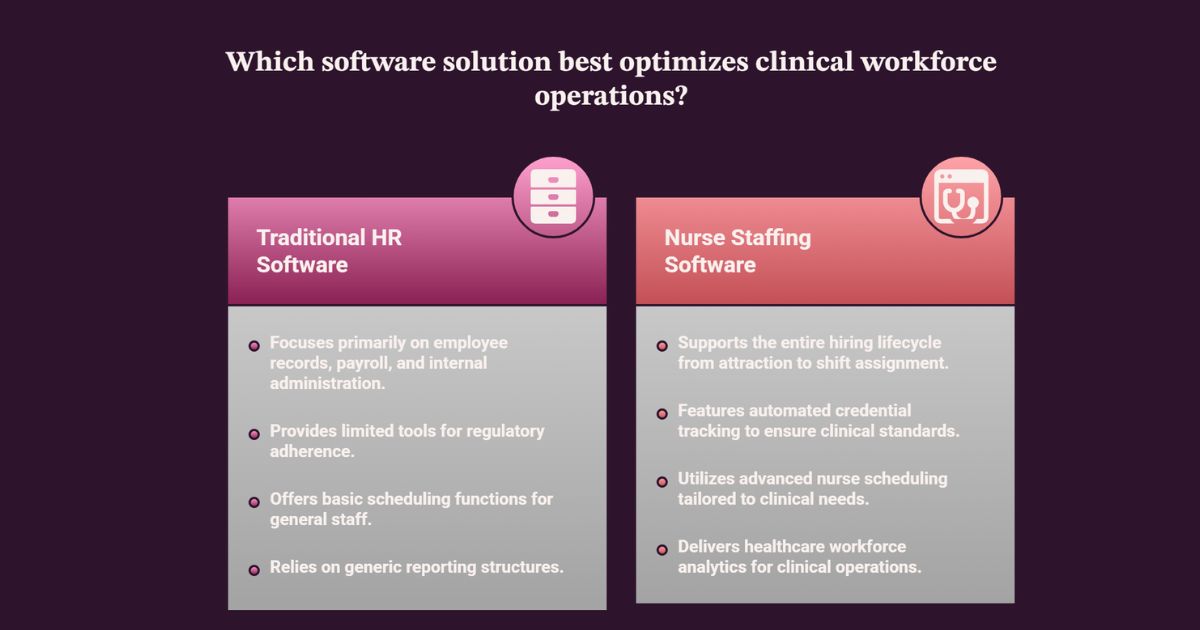
Traditional HR software focuses primarily on employee records, payroll, and internal administration after someone has already been hired.
Nurse staffing software supports the entire hiring lifecycle—from attracting candidates to assigning shifts and maintaining compliance.
Key differences include:
Healthcare organizations benefit from software designed specifically around nursing operations rather than adapting general HR tools to meet clinical staffing needs.
Who Uses Nurse Staffing Software?
Although hospitals are the largest users, many healthcare organizations benefit from staffing software.
Hospitals
Hospitals often manage hundreds, or even thousands, of nurses across different departments and shifts.
Staffing software helps hospitals:
- Fill open shifts faster
- Reduce overtime
- Maintain safe staffing ratios
- Track nursing credentials
- Improve scheduling accuracy
Large hospital systems also use predictive staffing tools to forecast future workforce needs.
Healthcare Staffing Agencies
Healthcare staffing agencies depend on speed.
Every day, recruiters must source candidates, verify credentials, coordinate interviews, communicate with clients, and place nurses quickly.
Staffing software helps agencies:
- Build talent pools
- Automate candidate sourcing
- Match nurses to open jobs
- Track placements
- Improve recruiter productivity
Many agencies also integrate customer relationship management (CRM) tools to strengthen employer relationships.
Long-Term Care Facilities
Long-term care providers often struggle with ongoing nursing shortages.
Software helps these facilities:
- Maintain staffing compliance
- Schedule recurring shifts
- Reduce agency spending
- Improve workforce visibility
Automated scheduling minimizes manual errors while helping administrators respond quickly to staffing gaps.
Home Healthcare Providers
Home healthcare organizations manage mobile caregivers working across multiple locations.
Staffing software allows managers to:
- Assign caregivers efficiently
- Monitor schedules remotely
- Track certifications
- Communicate instantly with field staff
- Improve patient coverage
Mobile access has become especially important as more caregivers work outside traditional healthcare facilities.
Why Healthcare Organizations Need Nurse Staffing Software in 2026
Healthcare staffing has changed dramatically over the past few years. Organizations are hiring in one of the most competitive labor markets the industry has experienced.
Modern nurse staffing software is no longer a luxury—it’s becoming an operational necessity.
Growing Nursing Shortages
Healthcare employers continue facing significant workforce shortages.
Several factors contribute to this challenge:
- Aging nursing workforce
- Higher retirement rates
- Increased patient demand
- Burnout
- Greater competition among employers
Recruiters must engage candidates quickly before competitors do.
Software helps automate sourcing, communication, and hiring workflows to reduce time-to-fill.
Increasing Compliance Requirements
Healthcare hiring involves much more than reviewing resumes.
Organizations must verify:
- Active nursing licenses
- Clinical certifications
- Background checks
- Vaccination records
- Continuing education
- Regulatory compliance
Manual tracking increases the risk of missed deadlines and expired credentials.
Modern platforms automatically monitor compliance and notify recruiters before credentials expire.
Faster Hiring Expectations
Qualified nurses often receive multiple job offers within days.
Organizations that rely on manual hiring processes risk losing top candidates before interviews even begin.
Automation helps recruiters:
- Screen applicants instantly
- Schedule interviews faster
- Send automated follow-ups
- Complete digital onboarding
Reducing delays improves both candidate experience and hiring success.
Reducing Administrative Work
Healthcare recruiters spend countless hours completing repetitive administrative tasks.
Examples include:
- Resume reviews
- Credential collection
- Email follow-ups
- Shift coordination
- Data entry
- Compliance reporting
Automation frees recruiters to spend more time building relationships with qualified candidates.
Instead of replacing recruiters, software allows them to focus on higher-value work.
Improving Patient Care Through Better Staffing
Every staffing decision ultimately affects patient care.
When organizations fill positions quickly and schedule nurses appropriately, they can:
- Reduce burnout
- Improve staff satisfaction
- Maintain safe staffing ratios
- Decrease overtime
- Deliver more consistent patient care
Technology supports better workforce planning, helping healthcare leaders make informed staffing decisions based on real-time data rather than guesswork.
Key Features to Look for in Nurse Staffing Software
Not every nurse staffing platform offers the same capabilities. Some focus primarily on scheduling, while others provide complete recruiting and workforce management solutions.
Before selecting software, healthcare organizations should evaluate which features will have the greatest impact on hiring speed, compliance, and long-term workforce management.
Applicant Tracking System (ATS)
An Applicant Tracking System (ATS) is the foundation of modern nurse staffing software.
It centralizes every stage of the hiring process, making it easier for recruiters to manage large volumes of applicants without losing visibility.
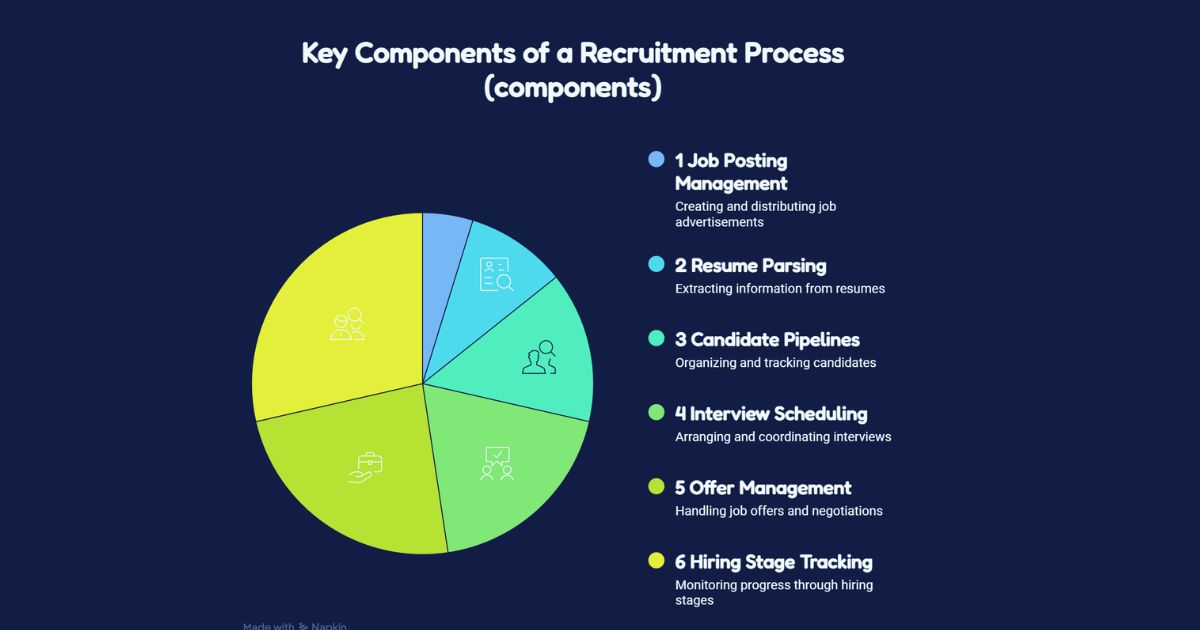
A strong healthcare ATS should include:
- Job posting management
- Resume parsing
- Candidate pipelines
- Interview scheduling
- Offer management
- Hiring stage tracking
Instead of managing dozens of spreadsheets, recruiters can monitor every candidate from application to placement in one dashboard.
Automated Credential Verification
Healthcare hiring depends on verified credentials.
The right platform should automatically track:
- Nursing licenses
- CPR certifications
- State-specific credentials
- Continuing education
- Expiration dates
Automatic reminders reduce compliance risks and help prevent staffing delays caused by expired documentation.
AI Candidate Matching
Artificial intelligence is transforming healthcare recruiting.
Rather than manually reviewing hundreds of resumes, AI can identify the strongest candidates based on:
- Skills
- Certifications
- Clinical specialties
- Years of experience
- Preferred locations
- Shift availability
This allows recruiters to prioritize qualified applicants much faster while improving placement accuracy.
Shift Scheduling & Workforce Planning
Scheduling remains one of the most important functions of nurse staffing software.
Look for features such as:
- Real-time shift assignments
- Open shift management
- Float pool scheduling
- Overtime tracking
- Staffing forecasts
- Multi-location scheduling
Advanced workforce planning tools help organizations anticipate staffing shortages before they affect patient care.
Mobile Accessibility
Healthcare professionals rarely work behind a desk.
Mobile applications allow recruiters, managers, and nurses to:
- Apply for jobs
- Accept shifts
- Upload credentials
- Receive notifications
- Communicate instantly
Mobile-first experiences improve engagement while speeding up hiring and scheduling workflows.
Compliance & License Tracking
Healthcare organizations operate under strict regulatory requirements. Missing an expired nursing license or certification can lead to compliance violations, staffing disruptions, and potential legal risks.
The best nurse staffing software continuously monitors employee credentials and automatically alerts recruiters when licenses or certifications are about to expire.
Look for platforms that support:
- Automatic license expiration alerts
- State nursing license verification
- Certification tracking
- Continuing education monitoring
- Digital document storage
- Compliance audit reports
Instead of manually reviewing spreadsheets each month, recruiters receive proactive notifications, reducing compliance risks and administrative work.
Payroll & Time Tracking
Hiring is only one part of workforce management. Accurate payroll and time tracking are equally important, especially for organizations managing multiple facilities, travel nurses, or per diem staff.
Modern nurse staffing software often integrates with payroll systems to automate time collection and reduce manual calculations.
Important capabilities include:
- Digital timesheets
- Clock-in and clock-out tracking
- Overtime monitoring
- Holiday pay calculations
- Shift differential tracking
- Payroll export
These features improve payroll accuracy while saving HR teams significant administrative time.
CRM for Healthcare Recruiters
Healthcare recruiting doesn’t end after filling one position. Building long-term relationships with nurses and healthcare employers is equally important.
A healthcare-specific Customer Relationship Management (CRM) system helps recruiters organize candidate interactions and maintain communication throughout the hiring journey.
Useful CRM features include:
- Candidate profiles
- Communication history
- Notes and reminders
- Talent pool management
- Employer relationship tracking
- Automated follow-ups
Recruiters spend less time searching for information and more time building meaningful relationships with qualified healthcare professionals.
Reporting & Analytics Dashboard
Data-driven recruiting has become a competitive advantage.
The best nurse staffing software provides dashboards that transform raw hiring data into actionable insights.
Common reports include:
- Time-to-hire
- Cost-per-hire
- Recruiter productivity
- Candidate source performance
- Fill rate
- Placement success
- Compliance status
- Open position tracking
Healthcare leaders can use these insights to improve recruitment strategies, allocate resources effectively, and forecast future staffing needs.
Third-Party Integrations
No staffing platform works in isolation.
The best solutions integrate with existing business systems to eliminate duplicate data entry and create a seamless workflow.
Payroll Systems
Payroll integrations synchronize:
- Employee hours
- Pay rates
- Overtime
- Tax information
- Compensation records
This reduces manual payroll processing while improving accuracy.
HRIS Platforms
Integration with Human Resource Information Systems (HRIS) allows organizations to maintain consistent employee records across departments.
Benefits include:
- Centralized employee information
- Automated onboarding
- Improved reporting
- Reduced administrative work
Job Boards
Recruiters should be able to publish jobs across multiple job boards with one click.
Common integrations include:
- Indeed
- ZipRecruiter
- CareerBuilder
- Healthcare-specific job boards
This expands candidate reach while reducing repetitive posting tasks.
Background Check Systems
Healthcare organizations must verify candidates before hiring.
Integrated background screening helps automate:
- Criminal background checks
- Employment verification
- Drug screening
- Identity verification
Recruiters can complete pre-employment screening faster without switching between multiple platforms.
Quick Comparison of the 10 Best Nurse Staffing Software Solutions
Before reviewing each platform in detail, the table below provides a high-level comparison to help healthcare organizations quickly identify which solution may best fit their hiring needs.
| Software | Best For | Key Features | Starting Price | Free Trial | Overall Rating |
|---|---|---|---|---|---|
| Bullhorn | Staffing agencies | ATS, CRM, automation, reporting | Custom Quote | Demo | ⭐⭐⭐⭐⭐ |
| ShiftMed | Healthcare shift staffing | On-demand staffing, scheduling, compliance | Custom Quote | Demo | ⭐⭐⭐⭐☆ |
| Aya Connect | Travel nurse staffing | Credentialing, scheduling, workforce management | Custom Quote | Demo | ⭐⭐⭐⭐⭐ |
| WorkN | Flexible workforce management | Mobile scheduling, communication, staffing | Custom Quote | Demo | ⭐⭐⭐⭐☆ |
| Connecteam | Small healthcare teams | Employee scheduling, communication, time tracking | From $29/month | Yes | ⭐⭐⭐⭐☆ |
| BluebixHealth Workforce Platform | Healthcare staffing agencies & employers | ATS, CRM, AI sourcing, AI matching, outreach automation | Custom Quote | Demo | ⭐⭐⭐⭐⭐ |
| NurseGrid | Individual nurses & scheduling | Shift calendar, availability management | Free/Paid Plans | Yes | ⭐⭐⭐⭐☆ |
| UKG Pro Workforce Management | Enterprise healthcare systems | Workforce planning, analytics, and scheduling | Custom Quote | Demo | ⭐⭐⭐⭐⭐ |
| HealthStream | Compliance & workforce development | Learning management, credentialing, compliance | Custom Quote | Demo | ⭐⭐⭐⭐☆ |
| Avionté Staffing Software | Staffing firms | ATS, CRM, payroll integration | Custom Quote | Demo | ⭐⭐⭐⭐☆ |
Tip: The best platform depends on your organization’s size, hiring volume, compliance requirements, and integration needs—not simply the number of features offered.
10 Best Nurse Staffing Software Solutions in 2026
1. Bullhorn
Bullhorn has long been one of the most recognized staffing software platforms. Designed primarily for staffing and recruitment agencies, it combines applicant tracking, customer relationship management, automation, and analytics into one cloud-based platform.
Healthcare staffing firms often choose Bullhorn because it supports high-volume recruiting while improving recruiter productivity.
Best For
Healthcare staffing agencies manage large candidate databases.
Key Features
- Applicant Tracking System (ATS)
- Candidate CRM
- Resume parsing
- Workflow automation
- Job posting management
- Reporting dashboards
- Mobile recruiting
- Email automation
Pros
- Easy recruiter workflow
- Strong automation tools
- Excellent CRM capabilities
- Extensive third-party integrations
- Scales with growing agencies
Cons
- Premium pricing
- Initial setup may require training
- Smaller agencies may not need every feature
2. ShiftMed
ShiftMed focuses on helping healthcare providers quickly fill nursing shifts using an on-demand workforce model.
Instead of relying solely on traditional staffing methods, organizations can connect with qualified healthcare professionals who are ready to work flexible schedules.
This approach helps reduce staffing shortages while improving workforce flexibility.
Best For
Hospitals and healthcare systems are managing frequent shift shortages.
Key Features
- Digital shift marketplace
- Mobile scheduling
- Credential management
- Automated workforce matching
- Time tracking
- Compliance monitoring
Pros
- Fast shift fulfillment
- User-friendly mobile experience
- Supports flexible staffing models
- Helps reduce overtime
Cons
- Primarily designed for shift staffing
- Enterprise customization may be limited
3. Aya Connect
Aya Connect is designed specifically for healthcare organizations managing travel nurses and contingent clinical staff.
It combines recruitment, credentialing, workforce management, and assignment tracking into one platform.
Healthcare employers use Aya Connect to streamline travel nurse placements while maintaining regulatory compliance.
Best For
Travel nursing agencies and healthcare systems use contingent staff.
Key Features
- Assignment management
- Credential tracking
- Compliance monitoring
- Workforce scheduling
- Vendor management
- Candidate communication
Pros
- Healthcare-focused platform
- Excellent travel nurse workflow
- Strong compliance tools
- Simplifies workforce planning
Cons
- Enterprise-focused pricing
- Smaller organizations may use only part of its functionality
4. WorkN
WorkN is a workforce management platform designed to simplify scheduling, communication, and employee engagement.
Its mobile-first design allows healthcare workers to manage shifts directly from their smartphones.
Recruiters benefit from faster communication while healthcare employees enjoy greater scheduling flexibility.
Best For
Healthcare providers need flexible workforce scheduling.
Key Features
- Mobile scheduling
- Shift notifications
- Employee messaging
- Time tracking
- Availability management
- Workforce reporting
Pros
- Simple mobile interface
- Improves employee engagement
- Quick scheduling updates
- Easy shift communication
Cons
- Limited recruiting functionality compared with enterprise ATS platforms
- Some advanced analytics require higher-tier plans
5. Connecteam
Connecteam is a workforce management solution designed for organizations with deskless employees, making it well-suited for home healthcare providers, clinics, and smaller healthcare organizations.
Its strength lies in combining scheduling, communication, and employee management into an intuitive mobile platform.
Healthcare managers can assign shifts, track attendance, share documents, and communicate with staff without requiring complex enterprise software.
Best For
Small to mid-sized healthcare organizations and home healthcare agencies.
Key Features
- Employee scheduling
- Time clock
- Internal communication
- Task management
- Digital forms
- Mobile app
- GPS attendance tracking
Pros
- Affordable pricing
- Easy implementation
- Strong mobile application
- Minimal learning curve
- Excellent for smaller teams
Cons
- Not built specifically for healthcare recruiting
- Limited applicant tracking capabilities compared with dedicated staffing platforms
6. BluebixHealth Workforce Platform
BluebixHealth Workforce Platform combines healthcare staffing expertise with modern recruiting technology to help healthcare employers and staffing agencies hire qualified nurses faster. Rather than offering only recruitment software, the platform supports the entire hiring workflow—from sourcing candidates to managing recruiter collaboration and candidate engagement.
Its AI-powered capabilities help reduce manual recruiting work while improving candidate quality and communication speed. Organizations that require both advanced recruiting technology and access to experienced healthcare staffing professionals may find this approach particularly valuable.
Best For
Healthcare staffing agencies, hospitals, clinics, long-term care facilities, and healthcare employers are looking for an all-in-one recruiting and workforce management solution.
Key Features
- Applicant Tracking System (ATS)
- Candidate Relationship Management (CRM)
- AI Candidate Sourcing
- AI Candidate Matching
- Resume Parsing
- Job Description Parsing
- LinkedIn Candidate Discovery
- Email Outreach Automation
- Gmail & Outlook Integration
- Candidate Pipeline Management
- Talent Pool Management
- Recruiter Collaboration
- Interview Tracking
- Reporting Dashboard
- Multi-user Workspaces
Pros
- Designed specifically for healthcare recruitment
- AI-powered sourcing and candidate matching
- Centralized recruiter collaboration
- Strong CRM and outreach automation
- Supports faster hiring workflows
- Helps build long-term talent pipelines
Cons
- Pricing is available upon request
- Organizations seeking only scheduling tools may not need the full recruiting feature set
7. NurseGrid
Unlike enterprise staffing platforms, NurseGrid focuses on helping nurses manage their personal schedules more efficiently.
Many hospitals encourage employees to use NurseGrid because it simplifies shift swapping, availability management, and work-life planning.
Although it is not a complete recruiting platform, it complements workforce scheduling exceptionally well.
Best For
Individual nurses and healthcare organizations are improving shift coordination.
Key Features
- Personal shift calendar
- Shift swapping
- Availability sharing
- Calendar synchronization
- Team scheduling visibility
- Mobile notifications
Pros
- Extremely user-friendly
- Popular among nursing professionals
- Excellent mobile experience
- Easy shift management
Cons
- Limited recruiting functionality
- Not intended as a complete staffing platform
- Minimal compliance management features
8. UKG Pro Workforce Management
UKG Pro Workforce Management is one of the industry’s most comprehensive workforce management platforms.
Large healthcare organizations use UKG to manage complex scheduling, labor forecasting, payroll, compliance, and workforce analytics across multiple facilities.
Its AI-driven forecasting tools help administrators anticipate staffing shortages before they become operational problems.
Best For
Enterprise hospitals and multi-location healthcare systems.
Key Features
- Advanced scheduling
- Workforce forecasting
- Compliance management
- Payroll integration
- Labor analytics
- Mobile workforce access
- Employee self-service
Pros
- Powerful workforce planning
- Enterprise-grade reporting
- Excellent scheduling capabilities
- Strong compliance support
- Highly scalable
Cons
- Significant implementation time
- Higher investment than smaller platforms
- May require dedicated administrators
9. HealthStream
HealthStream specializes in healthcare workforce development, compliance, and employee education.
Rather than focusing primarily on recruiting, organizations can maintain workforce competency through ongoing learning and credential management.
Healthcare organizations often integrate HealthStream alongside recruiting software to strengthen workforce compliance.
Best For
Healthcare organizations prioritize compliance and workforce development.
Key Features
- Learning management system (LMS)
- Credential tracking
- Competency assessments
- Continuing education
- Compliance reporting
- Workforce analytics
Pros
- Excellent compliance tools
- Strong employee development features
- Trusted within healthcare
- Supports regulatory requirements
Cons
- Limited recruiting automation
- Often requires integration with ATS platforms
10. Avionté Staffing Software
Avionté is a cloud-based staffing platform designed to help staffing firms automate recruiting, sales, payroll, and workforce management.
Its flexibility allows agencies across multiple industries—including healthcare—to manage recruiting and client relationships from a single platform.
Best For
Healthcare staffing agencies are seeking recruiting, CRM, and back-office automation.
Key Features
- Applicant Tracking System
- Candidate CRM
- Payroll integration
- Digital onboarding
- Recruiter dashboards
- Job order management
- Reporting tools
Pros
- Strong staffing workflow automation
- Good CRM capabilities
- Scalable for growing agencies
- Integrated payroll functionality
Cons
- Healthcare-specific features may require customization
- Interface may feel complex for smaller teams
How to Choose the Right Nurse Staffing Software
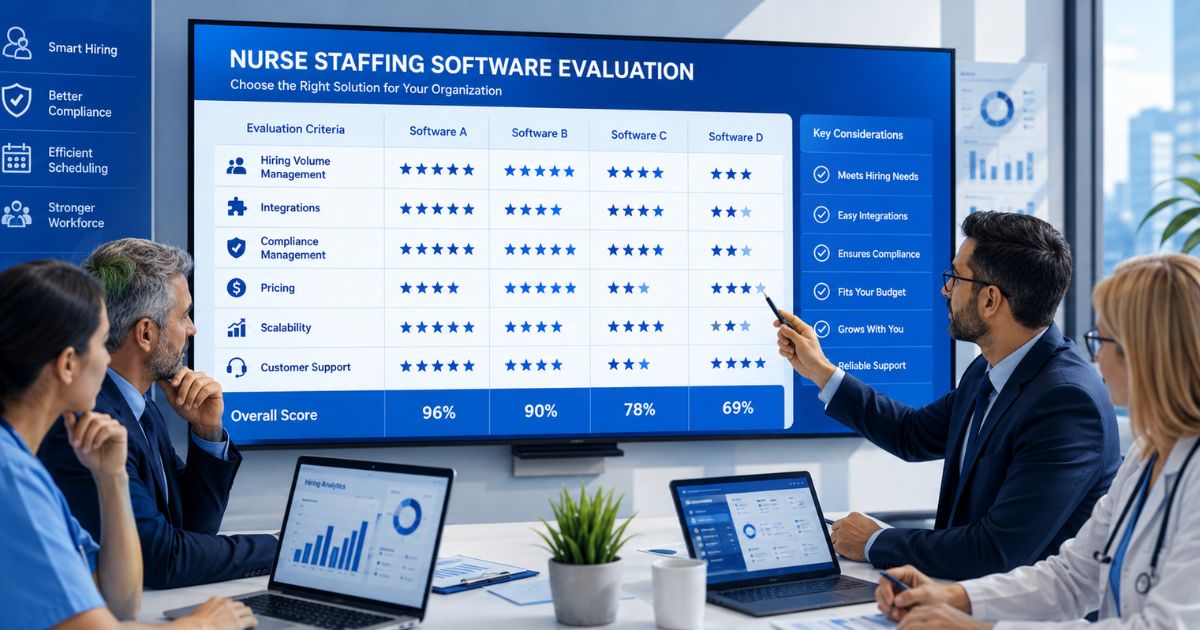
Choosing the right nurse staffing software involves more than comparing feature lists. The best solution should align with your hiring goals, workforce size, compliance requirements, and long-term growth plans.
Understand Your Hiring Volume
Start by evaluating how many healthcare professionals your organization hires each month.
Ask questions such as:
- Are you filling a few permanent positions each quarter?
- Do you recruit hundreds of travel nurses annually?
- Do you frequently manage urgent shift requests?
Organizations with high hiring volumes often benefit from advanced automation and AI-powered candidate matching.
Consider Your Team Size
Small healthcare staffing agencies may prioritize affordability and ease of use, while enterprise healthcare systems require advanced scheduling, analytics, and workforce planning.
Choose software that supports your current team without limiting future growth.
Evaluate Integration Needs
The best software should integrate with your existing technology.
Review compatibility with:
- Payroll systems
- HRIS platforms
- Background screening providers
- Accounting software
- Job boards
- Email platforms
- Calendar applications
Integrations eliminate duplicate work and improve operational efficiency.
Review Compliance Features
Healthcare compliance should never be an afterthought.
Ensure the platform includes:
- License verification
- Certification tracking
- Credential monitoring
- Audit reports
- Expiration reminders
- Secure document storage
These capabilities help reduce compliance risks and maintain workforce readiness.
Compare Pricing Models
Vendors use different pricing structures.
Common models include:
- Monthly subscriptions
- Per-user pricing
- Enterprise licensing
- Custom quotes
Look beyond the monthly fee by considering:
- Implementation costs
- Training expenses
- Integration fees
- Customer support
- Future scalability
Test Customer Support
Reliable support becomes essential during implementation and daily operations.
Before purchasing, evaluate:
- Live chat availability
- Phone support
- Response times
- Training resources
- Knowledge base
- Customer success programs
Responsive support can significantly reduce downtime and improve user adoption.
Request a Free Demo Before Purchasing
A product demonstration helps healthcare organizations understand how the software fits their workflow.
During the demo, involve:
- Recruiters
- HR managers
- Nursing leadership
- IT teams
- Compliance officers
Testing real hiring scenarios allows decision-makers to identify strengths and limitations before making a long-term investment.
Common Mistakes to Avoid When Buying Nurse Staffing Software
Selecting the wrong platform can slow hiring rather than improve it.
Avoid these common mistakes:
Choosing Based Only on Price
The least expensive software isn’t always the best value.
A platform with stronger automation may save hundreds of recruiter hours each year.
Ignoring Compliance Features
Healthcare organizations should prioritize compliance as much as recruitment.
Missing credential tracking can create significant operational risks.
Not Considering Scalability
Your staffing needs may double over the next few years.
Choose software that can grow with your organization.
Overlooking User Experience
Complex systems often reduce user adoption.
Look for intuitive dashboards and mobile-friendly interfaces.
Failing to Train Staff
Even the best software delivers poor results without proper training.
Provide onboarding sessions, documentation, and ongoing support to maximize return on investment.
Benefits of Using Nurse Staffing Software
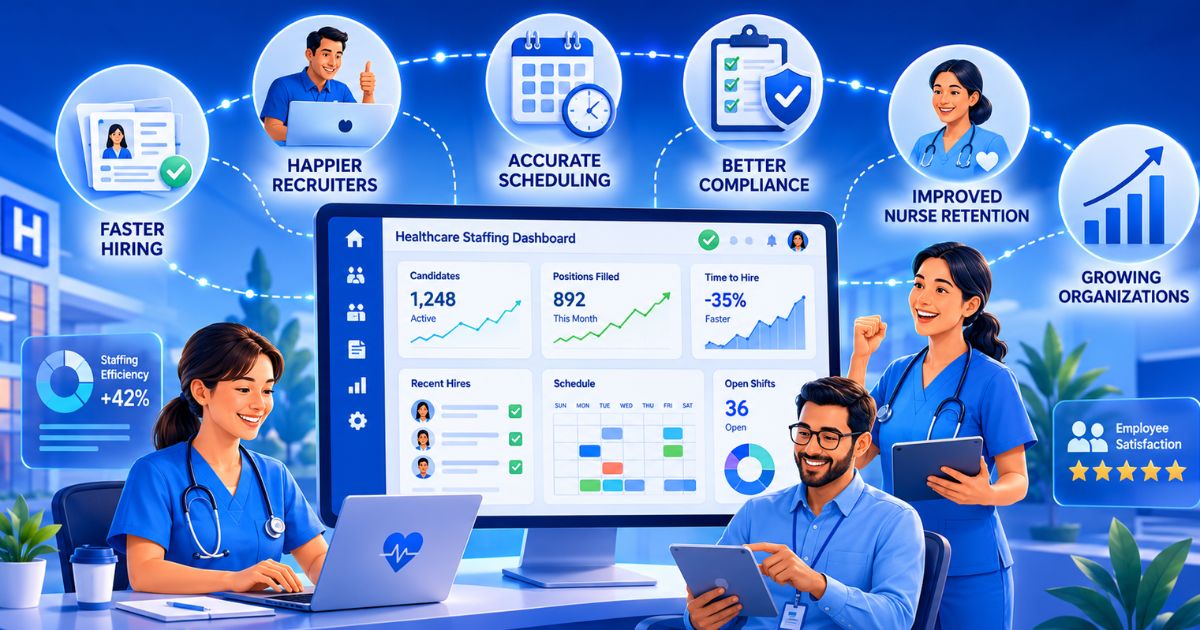
Healthcare organizations that use modern nurse staffing software often see real improvements in hiring speed, scheduling accuracy, recruiter performance, compliance, and overall workforce management.
In a healthcare environment where every open shift can affect patient care, the right software helps teams work faster, stay organized, and make better staffing decisions.
Faster Hiring
One of the biggest benefits of nurse staffing software is faster hiring. Instead of manually reviewing resumes, sending follow-up emails, and tracking candidates in spreadsheets, recruiters can manage everything in a single system.
Automation helps screen applicants, organize candidate pipelines, schedule interviews, and send timely updates. This reduces delays and helps healthcare organizations connect with qualified nurses before competitors do.
Better Candidate Experience
Nurses expect a smooth and professional hiring process. If communication is slow or unclear, strong candidates may accept another offer.
Nurse staffing software improves the candidate experience by making applications easier, communication faster, and onboarding more organized.
Candidates can receive updates, upload documents, complete forms, and move through the process without unnecessary confusion.
Reduced Scheduling Errors
Manual scheduling can lead to mistakes such as double-booked shifts, missed coverage, overtime issues, or wrong assignments.
Digital scheduling tools give managers better visibility into staff availability, open shifts, certifications, and location requirements. This helps healthcare teams assign the right nurse to the right shift at the right time.
Increased Recruiter Productivity
Recruiters spend many hours on repetitive tasks. Nurse recruitment software reduces that workload by automating resume parsing, follow-ups, credential reminders, and candidate matching.
As a result, recruiters can spend more time speaking with qualified nurses, building relationships, and filling urgent roles.
Better Compliance
Healthcare staffing requires strict tracking of licenses, certifications, and credentials. Nurse staffing software helps monitor expiration dates, securely store documents, and send automatic reminders before important credentials expire. This reduces compliance risks and supports audit readiness.
Improved Staff Retention
Better staffing systems can also support retention. When nurses receive clear communication, fair scheduling, and smoother onboarding, they are more likely to feel valued and stay longer. Organized workforce planning also helps reduce burnout caused by last-minute scheduling problems.
Stronger Business Growth
When healthcare organizations hire faster, reduce errors, and manage staff more efficiently, they can serve more patients, support more facilities, and grow with confidence.
For staffing agencies, better systems can also improve client satisfaction, increase placements, and create stronger long-term revenue opportunities.
Future Trends in Nurse Staffing Software (2026 & Beyond)
Healthcare workforce technology continues to evolve rapidly.
Several innovations are expected to shape the next generation of nurse staffing software.
AI-Powered Candidate Matching
Artificial intelligence will continue improving candidate recommendations based on skills, certifications, experience, and cultural fit.
Predictive Workforce Planning
Advanced analytics will forecast staffing shortages before they occur, helping organizations proactively recruit talent.
Automated Credential Monitoring
Real-time integrations with licensing databases will further reduce manual compliance management.
Voice & Mobile Recruiting
Healthcare professionals increasingly expect mobile-first recruiting experiences, including voice-enabled applications and instant communication.
Workforce Analytics
Organizations will rely more heavily on predictive dashboards to measure hiring performance, retention, staffing costs, and workforce utilization.
Integration with Telehealth Platforms
As virtual healthcare continues growing, staffing platforms will increasingly integrate with telehealth scheduling, workforce planning, and remote care systems.
Final Thoughts: Which Nurse Staffing Software Is Best?
There is no single nurse staffing software solution that fits every healthcare organization. The right choice depends on your hiring volume, workforce size, compliance requirements, budget, and long-term growth strategy.
Some organizations prioritize AI-powered recruiting, while others need advanced scheduling, workforce analytics, or enterprise workforce management.
If your organization also needs access to qualified healthcare professionals, not just software, partnering with an experienced healthcare staffing agency can further simplify the hiring process.
BluebixHealth helps healthcare organizations connect with vetted nursing professionals while supporting efficient recruitment workflows through modern technology and staffing expertise. Combining the right software with the right staffing partner can improve hiring speed, workforce quality, and ultimately patient care.
Frequently Asked Questions
What is the difference between nurse staffing software and nurse scheduling software?
Nurse staffing software focuses on recruiting, applicant tracking, credential management, onboarding, and workforce management. Nurse scheduling software primarily manages employee shifts, availability, and scheduling. Many modern platforms combine both functions into one solution.
Is nurse staffing software suitable for small healthcare staffing agencies?
Yes. Many cloud-based platforms offer scalable pricing and features tailored to smaller healthcare staffing agencies. They help automate recruiting, scheduling, and compliance without requiring significant infrastructure investments.
Can nurse staffing software verify nursing licenses automatically?
Many leading solutions integrate with credential verification and licensing databases to automatically monitor certifications, expiration dates, and compliance requirements, reducing manual work and staffing risks.
How much does nurse staffing software typically cost?
Pricing varies based on organization size, number of users, features, integrations, and implementation requirements. Some vendors offer monthly subscriptions, while enterprise platforms provide custom pricing.
Does nurse staffing software integrate with payroll systems?
Yes. Most modern platforms integrate with payroll, HRIS, accounting software, time tracking systems, and background screening providers to streamline workforce management and reduce duplicate data entry.
Can nurse staffing software help reduce time-to-hire?
Absolutely. Features such as AI candidate matching, applicant tracking, automated workflows, digital onboarding, and communication tools help organizations shorten hiring cycles while improving recruiter productivity.
What security features should healthcare organizations look for?
Look for solutions that provide HIPAA compliance, encryption, role-based access controls, secure cloud hosting, audit logs, multi-factor authentication, and regular security updates to protect sensitive information.
Can travel nurse agencies use nurse staffing software?
Yes. Many platforms support travel nurse recruitment through assignment management, credential tracking, compliance monitoring, multi-location scheduling, and workforce planning features.
How long does it take to implement nurse staffing software?
Implementation timelines vary from a few days for simple cloud-based solutions to several months for enterprise systems requiring data migration, workflow customization, integrations, and staff training.
Should healthcare organizations use staffing software or outsource recruitment?
Many healthcare employers benefit from combining both approaches. Staffing software streamlines internal hiring processes, while an experienced healthcare staffing partner like BluebixHealth provides immediate access to qualified nursing professionals during periods of high hiring demand or urgent staffing need