
Top 10 Physical Therapist Staffing Agency Solutions for Healthcare Hiring
Hiring the right physical therapist at the right time is one of the biggest challenges healthcare facilities face today. A physical therapist staffing agency helps solve this problem by connecting hospitals, clinics, and rehab centers with qualified professionals quickly and efficiently.
When patient demand rises or staff shortages hit, delays in hiring can directly impact patient care. That’s where staffing agencies step in. They act like a bridge—bringing skilled therapists exactly when and where they’re needed.
In this guide, you’ll learn how these agencies work, why they matter, and how they can transform your hiring process.
2. What Is a Physical Therapist Staffing Agency?
2.1 Definition and Core Role
A physical therapist staffing agency is a specialized recruitment partner that helps healthcare organizations hire licensed PT professionals. Instead of spending weeks or months searching for candidates, facilities can rely on these agencies to deliver pre-qualified therapists quickly.
Think of it like having a “talent pipeline on demand.” Whether you run a hospital, outpatient clinic, or rehabilitation center, a PT staffing agency ensures you always have access to the right professionals.
Their core responsibilities include:
- Sourcing and screening candidates
- Verifying licenses and credentials
- Matching therapists with facility needs
- Managing onboarding and compliance
2.2 Types of Physical Therapy Staffing
A PT staffing agency offers flexible hiring options based on your needs:
- Travel Physical Therapists: Ideal for short-term assignments in high-demand locations
- Per Diem Staffing: Fill shifts as needed without long-term commitment
- Contract & Locum Tenens: Temporary coverage for specific periods
- Direct Hire Placements: Permanent hiring for long-term roles
3. Why Healthcare Facilities Struggle to Hire Physical Therapists
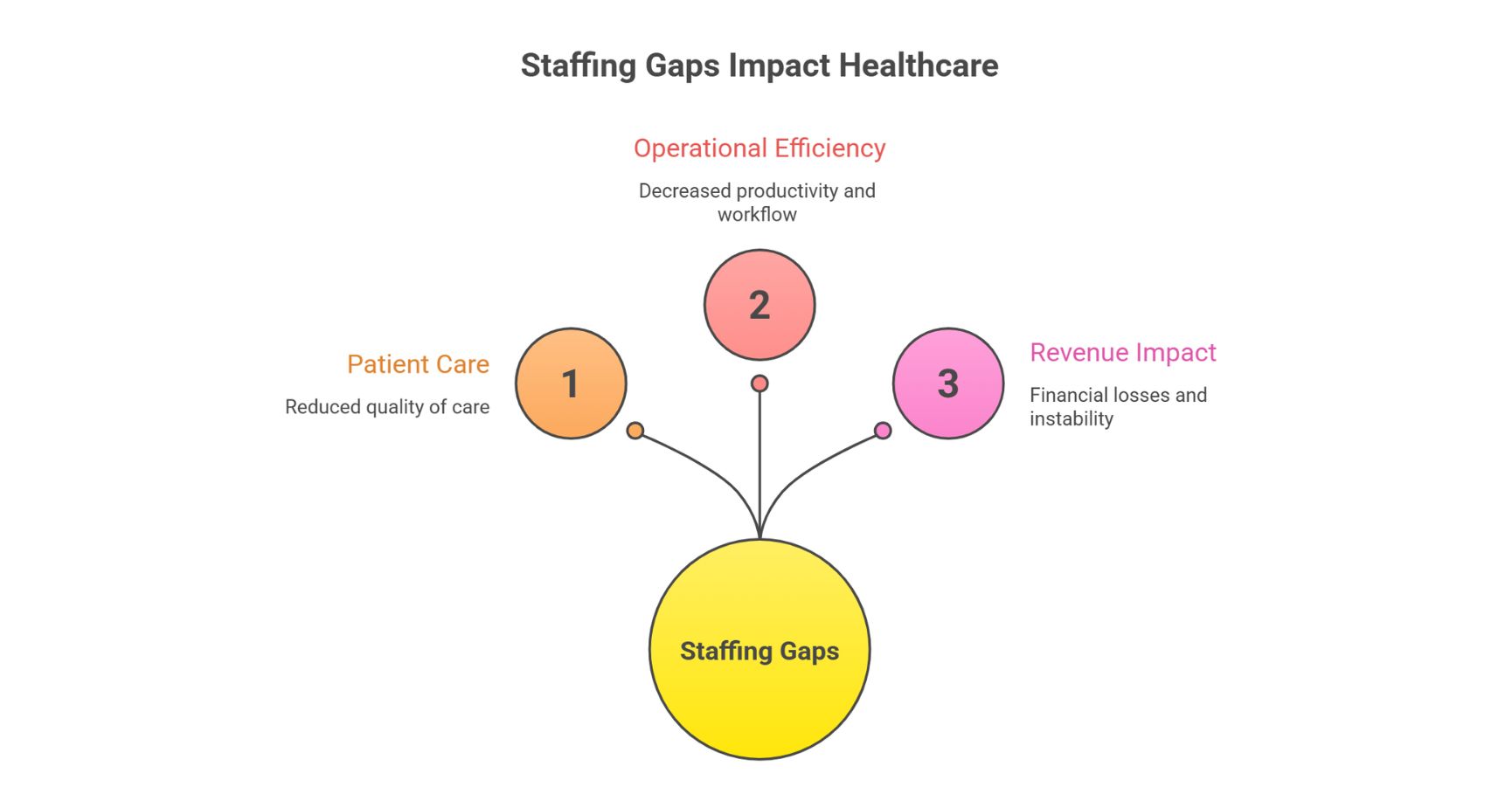
Hiring physical therapists today is not just a routine HR task—it’s a growing challenge that affects patient care, operational efficiency, and revenue. Many healthcare facilities face ongoing staffing gaps, and the reasons go deeper than just “not enough applicants.
Understanding these challenges helps explain why partnering with a physical therapist staffing agency has become essential.
3.1 Talent Shortage in Physical Therapy
The demand for physical therapists is rising rapidly due to an aging population, increased focus on rehabilitation, and higher rates of chronic conditions.
At the same time, the number of qualified therapists entering the workforce is not growing fast enough. This imbalance creates a highly competitive hiring environment where facilities struggle to secure top talent before competitors do.
3.2 High Turnover and Burnout
Physical therapists often work in fast-paced environments with high patient loads. Over time, this can lead to fatigue and burnout. When therapists leave, facilities are forced back into the hiring cycle, increasing costs and disrupting care continuity.
It’s like trying to fill a bucket with a leak—no matter how much you pour in, it keeps draining.
3.3 Credentialing and Compliance Delays
Healthcare hiring involves strict regulations. Every therapist must have verified licenses, certifications, and background checks. While these steps are critical for patient safety, they also slow down the hiring process. Even after finding the right candidate, onboarding delays can leave positions vacant for weeks.
3.4 Geographic Hiring Challenges
Location plays a major role in hiring success. Urban areas may have more candidates, but competition is intense. Rural and underserved regions face even bigger challenges, with fewer qualified therapists willing to relocate. This creates long-term staffing gaps that are difficult to fill internally.
4. Benefits of Using a Physical Therapist Staffing Agency
In today’s competitive healthcare environment, hiring delays don’t just affect operations—they impact patient outcomes, staff morale, and revenue. A physical therapist staffing agency acts as a strategic partner, helping healthcare facilities solve hiring challenges quickly and efficiently.
Instead of struggling with long recruitment cycles, organizations can access ready-to-work professionals and maintain consistent care delivery.
4.1 Faster Time-to-Hire
Traditional hiring can take weeks—or even months—due to job postings, resume screening, and multiple interview rounds. In contrast, staffing agencies maintain a pipeline of pre-qualified candidates.
This allows facilities to fill urgent roles in days, not weeks. For hospitals dealing with sudden patient surges or staff shortages, this speed can make a critical difference.
4.2 Access to Pre-Vetted, Licensed Professionals
Staffing agencies don’t just send resumes—they deliver qualified professionals who are ready to perform. Every candidate goes through a detailed screening process, including license verification, background checks, and skill assessments.
This ensures compliance with healthcare standards and reduces the risk of hiring mistakes. In simple terms, you’re not starting from scratch—you’re choosing from a pool of proven talent.
4.3 Flexible Staffing Models
Healthcare demand is rarely constant. Some days are manageable, while others require extra hands on deck. A staffing agency offers flexible solutions such as PRN (as-needed), contract, travel, and full-time placements.
This flexibility allows organizations to scale their workforce up or down based on patient volume, seasonal trends, or expansion plans—without long-term commitments.
4.4 Reduced Administrative Burden
Recruitment is time-consuming and resource-intensive. From writing job descriptions to coordinating interviews and handling onboarding paperwork, the process can overwhelm internal HR teams.
Staffing agencies take over these responsibilities, allowing healthcare administrators and HR professionals to focus on core operations. It’s like outsourcing the heavy lifting while keeping full control over hiring decisions.
4.5 Improved Patient Care Continuity
At the end of the day, staffing is not just about filling roles—it’s about maintaining quality care. When positions remain vacant, patient wait times increase, staff workloads rise, and care quality can decline.
A staffing agency ensures that qualified therapists are always available, helping facilities maintain consistent service levels and better patient outcomes.
5. Types of Physical Therapist Staffing Solutions
Not every healthcare facility has the same staffing needs. Some need immediate short-term coverage, while others are focused on long-term workforce stability.
A physical therapist staffing agency offers multiple staffing solutions designed to match different operational goals, patient volumes, and budget constraints.
Understanding these options helps you choose the right strategy instead of relying on a one-size-fits-all approach.
5.1 Travel Physical Therapist Staffing
Travel physical therapists take short-term assignments, typically ranging from 8 to 13 weeks, in different locations. This solution is ideal for facilities facing temporary shortages, seasonal spikes, or unexpected staff absences.
Travel PTs are highly adaptable and experienced in working in new environments quickly. For example, a rehabilitation center experiencing a sudden increase in post-surgery patients can use travel therapists to maintain service quality without long-term hiring commitments.
5.2 Per Diem / PRN Staffing
Per diem (PRN) staffing is one of the most flexible options available. Facilities can bring in therapists only when needed—whether it’s for a single shift, weekend coverage, or peak hours.
This model is especially useful for managing fluctuating patient volumes without overstaffing. Think of it as having an “on-call” workforce that supports your core team when demand rises.
5.3 Contract-to-Hire Solutions
Contract-to-hire is a smart approach for reducing hiring risk. It allows you to bring a therapist on a temporary contract and evaluate their performance, skills, and cultural fit before making a permanent offer.
This model is particularly helpful for roles that require long-term commitment but where hiring mistakes can be costly. It’s like a trial period that ensures you make the right decision.
5.4 Direct Hire Placement
For organizations looking to build stable, long-term teams, direct hire staffing is the best option. A staffing agency sources, screens, and presents candidates who align with your clinical standards and organizational culture.
This saves time while improving retention rates, as candidates are carefully matched based on both skills and long-term fit.
5.5 Telehealth Physical Therapy Staffing
With the rise of digital healthcare, telehealth physical therapy is becoming more common. Remote therapists can provide consultations, exercise guidance, and follow-up care through virtual platforms.
This solution expands access to care, especially for patients in remote areas, and helps facilities overcome geographic hiring challenges.
6. How a Physical Therapist Staffing Agency Works
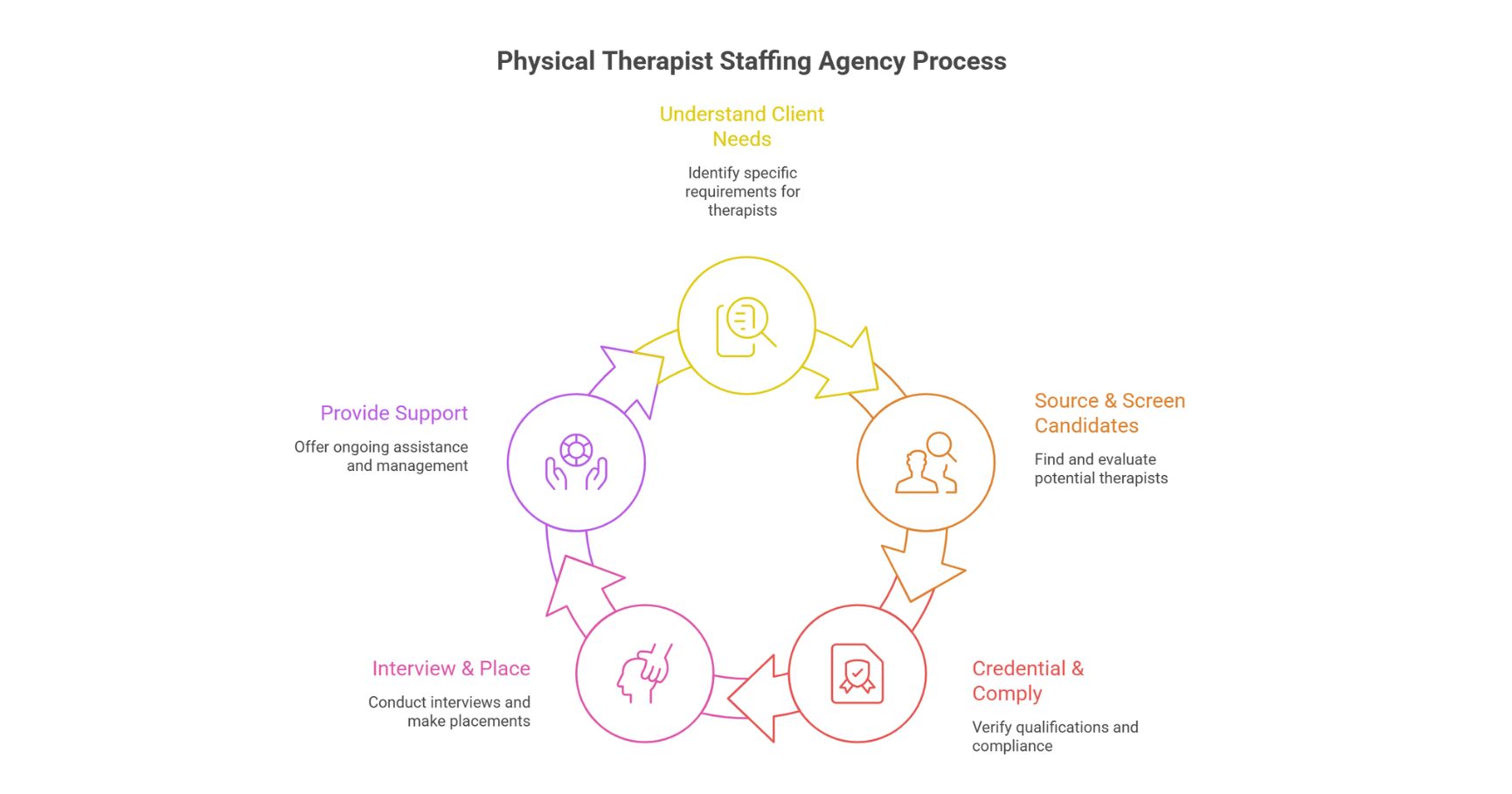
A physical therapist staffing agency doesn’t just send candidates—it follows a structured, efficient process designed to save time, reduce hiring risks, and ensure quality placements.
Think of it as a well-organized system where every step is built to deliver the right therapist at the right time.
6.1 Understanding Client Requirements
This includes the role type (temporary, contract, or permanent), required qualifications, work schedule, patient population, and location. A good agency will also learn about your facility’s culture and expectations.
6.2 Candidate Sourcing & Screening
Once requirements are clear, the agency taps into its talent network, databases, and recruitment channels to find suitable candidates.
But sourcing is just the beginning. Each candidate goes through a thorough screening process, including resume evaluation, skill assessments, and initial interviews. Only the most qualified therapists move forward.
6.3 Credentialing and Compliance Checks
Healthcare hiring requires strict compliance. Agencies verify licenses, certifications, work history, and conduct background checks. They also ensure candidates meet state-specific requirements. This step protects your facility from legal risks and ensures patient safety.
6.4 Interview & Placement Process
After screening, the agency presents a shortlist of candidates. You can interview them to assess their clinical skills and cultural fit. Once you select a candidate, the agency handles onboarding, documentation, and placement logistics. This makes the transition smooth and fast.
6.5 Ongoing Support & Workforce Management
The relationship doesn’t end after placement. A reliable agency provides ongoing support, including performance follow-ups, replacement guarantees if needed, and workforce management assistance. This ensures long-term success and stability.
7. Key Features to Look for in the Best PT Staffing Agency
Choosing the right physical therapist staffing agency is not just about filling a position—it’s about finding a long-term hiring partner that understands your challenges and delivers consistent results.
The wrong choice can lead to delays, poor hires, and compliance risks, while the right partner can transform your entire recruitment process.
7.1 Industry Experience in Healthcare Staffing
Healthcare staffing is very different from general recruitment. It involves strict regulations, specialized roles, and high accountability.
An agency with proven experience in physical therapy recruitment understands clinical requirements, licensing standards, and patient care expectations. This expertise helps them match candidates more accurately and avoid costly hiring mistakes.
7.2 Strong Talent Network
A reliable agency should have access to a large and active pool of qualified physical therapists. This includes travel PTs, PRN professionals, and full-time candidates. A strong talent network means faster placements and better options for your facility.
Instead of waiting weeks for applicants, you get immediate access to ready-to-work professionals.
7.3 Compliance & Credentialing Expertise
Compliance is one of the most critical aspects of healthcare hiring. From license verification to background checks and documentation, every step must meet regulatory standards.
A good staffing agency handles this process seamlessly, ensuring that every candidate is fully qualified and compliant before placement. This reduces legal risks and protects your organization.
7.4 Transparent Communication
Clear and consistent communication builds trust. The best agencies provide regular updates, realistic timelines, and honest feedback throughout the hiring process. You should never feel left in the dark. Transparency ensures smoother collaboration and better decision-making.
7.5 Technology & Data-Driven Hiring
Modern staffing agencies use advanced tools, including AI and data analytics, to match candidates more effectively. These technologies help identify the best fit based on skills, experience, and performance data.
As a result, hiring becomes faster, smarter, and more accurate.
8. Cost of Hiring Through a Physical Therapist Staffing Agency
Cost is often the first question healthcare leaders ask when considering a physical therapist staffing agency.
While agency pricing can seem higher than traditional hiring at first glance, the real picture becomes clearer when you look at time savings, reduced risk, and long-term value.
Understanding how pricing works helps you make smarter, more confident decisions.
8.1 Pricing Models Explained
Staffing agencies typically use a few common pricing structures, depending on the type of role and engagement:
- Hourly Markup:
This model is widely used for temporary or PRN roles. The agency charges an hourly rate that includes the therapist’s pay plus a markup covering recruitment, compliance, and administrative services. It’s simple, flexible, and ideal for short-term needs. - Placement Fees:
For direct hire positions, agencies charge a one-time fee, usually based on a percentage of the candidate’s annual salary. This covers sourcing, screening, and placement. It’s best for long-term hiring where retention and cultural fit matter most. - Contract Rates:
For contract or travel assignments, agencies provide a fixed rate that includes compensation, benefits (if applicable), and service fees. This model offers predictable costs for defined time periods.
8.2 Cost vs Value Analysis
At first, agency costs may appear higher than handling hiring internally. But when you factor in hidden costs—job advertising, HR time, delayed hires, overtime for existing staff, and turnover—the value becomes clear.
A staffing agency reduces time-to-hire, ensures better candidate quality, and minimizes costly hiring mistakes. Faster placements also mean fewer disruptions to patient care and revenue flow.
In simple terms, working with a staffing agency is less about spending more and more about spending smarter. It’s an investment in efficiency, quality, and long-term stability.
9. When Should You Use a Physical Therapist Staffing Agency?
Knowing when to partner with a physical therapist staffing agency can make a major difference in how smoothly your operations run. Many healthcare organizations wait until staffing becomes a crisis—but the smartest approach is to use staffing support proactively, not just reactively.
Urgent Staffing Shortages
When a therapist resigns unexpectedly or goes on leave, patient care can be disrupted almost immediately. In these situations, time is critical.
A staffing agency can quickly provide qualified professionals, helping you avoid service gaps, staff overload, and revenue loss. Instead of scrambling for candidates, you get immediate access to ready-to-work therapists.
Seasonal Demand Increases
Healthcare demand often fluctuates throughout the year. For example, rehabilitation services may see spikes after peak surgery periods or during certain seasons. Hiring full-time staff for short-term demand isn’t always cost-effective.
A staffing agency allows you to scale your workforce up or down based on patient volume, keeping operations efficient.
Expansion or New Facility Openings
Opening a new clinic or expanding services requires fast and reliable hiring. Building a team from scratch can be time-consuming and risky.
Staffing agencies help accelerate this process by providing pre-vetted candidates, allowing you to launch operations without delays.
Specialized Skill Requirements
Some roles require niche expertise, such as sports rehabilitation, geriatric therapy, or post-surgical care. Finding these specialists through traditional hiring methods can be challenging.
Staffing agencies have access to a wider talent pool, making it easier to fill specialized roles quickly and accurately.
In simple terms, a staffing agency acts like a backup system for your workforce—ready to step in whenever demand rises, challenges appear, or growth opportunities emerge.
10. How to Choose the Right Physical Therapist Staffing Partner
Choosing the right physical therapist staffing agency is not just about filling a vacancy—it’s about building a reliable hiring system that supports your long-term goals.
The right partner can reduce hiring stress, improve candidate quality, and ensure compliance, while the wrong one can lead to delays, poor placements, and operational risks. To make the best decision, you need a clear evaluation approach.
10.1 Questions to Ask Before Partnering
Before committing to any agency, ask the right questions to understand their capabilities and process:
- How quickly can you fill urgent physical therapist roles?
- What does your candidate screening and credentialing process include?
- Do you specialize in healthcare or physical therapy staffing?
- How large and active is your therapist network?
- What kind of ongoing support do you provide after placement?
These questions help you assess whether the agency can meet your speed, quality, and compliance expectations.
10.2 Red Flags to Avoid
Not all. Watch out for warning signs such as:
- Lack of transparency in pricing or timelines
- Limited or outdated candidate pool
- Weak communication or delayed responses
- Incomplete credentialing or compliance processes
If an agency struggles to provide clear answers or seems disorganized, it can lead to bigger issues later. In healthcare, even small mistakes can have serious consequences.
10.3 Evaluating Performance Metrics
A reliable staffing partner should be able to prove their effectiveness with real data. Key metrics to review include:
- Time-to-hire: How quickly they fill roles
- Candidate retention rate: How long placements stay in the role
- Fill rate: Percentage of roles successfully filled
- Client satisfaction: Feedback from other healthcare organizations
These metrics give you a clear picture of performance and reliability.
11. Future Trends in Physical Therapy Staffing
The world of healthcare staffing is changing rapidly, and physical therapy is no exception. For healthcare leaders, understanding these trends is not just helpful—it’s essential for staying competitive, improving patient outcomes, and building a future-ready workforce.
A modern physical therapist staffing agency is no longer just a hiring partner; it’s a strategic ally that helps organizations adapt to these changes.
11.1 Tele-Rehabilitation Growth
Tele-rehabilitation is transforming how physical therapy services are delivered. With advancements in digital health platforms, therapists can now guide patients remotely through exercises, recovery plans, and follow-ups.
This trend is especially valuable for patients in rural or underserved areas. For healthcare providers, it means access to a broader talent pool without geographic limitations.
11.2 AI in Recruitment
Artificial Intelligence is reshaping the hiring process. Modern staffing agencies use AI-powered tools to analyze resumes, match candidates with job requirements, and predict performance outcomes.
This reduces hiring time and improves accuracy. Instead of relying on manual screening, organizations can make faster, data-driven decisions that lead to better hires.
11.3 Demand for Specialized Therapists
The demand for specialized physical therapists is growing steadily. Areas like sports rehabilitation, geriatric care, neurological therapy, and post-surgical recovery require advanced skills and experience.
Healthcare facilities are no longer just hiring generalists—they need experts who can deliver targeted care. This makes specialized staffing support more important than ever.
11.4 Flexible Workforce Models
Today’s workforce values flexibility more than ever. Many physical therapists prefer PRN, contract, or travel roles instead of traditional full-time positions. This shift is pushing healthcare organizations to adopt more flexible staffing strategies.
Agencies play a key role in managing this dynamic workforce while ensuring consistent patient care.
In simple terms, the future of physical therapy workforce staffing is faster, smarter, and more flexible—and organizations that adapt early will have a clear advantage.
12. Conclusion
A physical therapist staffing agency is no longer just an option—it’s a strategic advantage. In today’s fast-paced healthcare environment, speed, quality, and flexibility are critical. Staffing agencies help you stay ahead by providing access to qualified professionals when you need them most.
With the right partner, you can reduce hiring stress, improve patient care, and build a stronger workforce.
At Bluebix Health, we specialize in connecting healthcare organizations with top-tier talent quickly and efficiently. Whether you need temporary coverage or long-term hires, we’re here to help.
👉 Ready to optimize your staffing strategy? Visit www.bluebixhealth.com and connect with the right talent today.
FAQs
What makes a physical therapist staffing agency different from general healthcare staffing firms?
A specialized PT staffing agency focuses exclusively on therapy professionals, ensuring deeper candidate screening, better skill matching, and faster placements. They understand rehab-specific needs, licensing, and patient care requirements, making them more effective than general staffing firms.
How quickly can a physical therapist staffing agency fill urgent roles?
Most agencies can fill urgent PT roles within days due to their pre-vetted talent pool. Speed depends on location, specialization, and contract type, but agencies significantly reduce hiring timelines compared to traditional recruitment methods.
Are physical therapists provided by staffing agencies fully licensed and compliant?
Yes, reputable agencies ensure all therapists meet state licensing requirements, background checks, and credentialing standards. This reduces compliance risks and ensures quality patient care from day one.
Is it more expensive to hire through a staffing agency?
While upfront costs may seem higher, agencies reduce long-term expenses by minimizing turnover, speeding up hiring, and lowering administrative workload. The ROI often outweighs the initial investment.
Can staffing agencies provide therapists for short-term or temporary needs?
Yes, agencies offer flexible staffing options such as per diem, contract, and travel PTs, allowing facilities to manage fluctuating patient demand efficiently without long-term commitments.
What types of facilities benefit most from PT staffing agencies?
Hospitals, outpatient clinics, rehab centers, nursing homes, and home healthcare providers benefit the most, especially those experiencing staffing shortages or rapid growth.
How do staffing agencies ensure the quality of physical therapists?
They conduct rigorous screening, including interviews, credential verification, reference checks, and skills assessments to ensure candidates meet clinical and professional standards.
Can a staffing agency help with permanent physical therapist hiring?
Yes, many agencies offer direct hire services, helping facilities find long-term employees who align with organizational culture and patient care goals.
What should I look for when choosing a PT staffing agency?
Look for experience in healthcare staffing, strong candidate networks, compliance expertise, transparent communication, and proven success in placing qualified therapists quickly.
How do staffing agencies support long-term workforce planning?
They provide data insights, workforce flexibility, and scalable hiring solutions, helping organizations plan ahead and adapt to changing patient demand and staffing needs.