
How Much Do Staffing Agencies Charge for Direct Hire? 7 Proven Cost Facts
Healthcare hiring is not just about filling positions anymore. Hospitals, clinics, nursing homes, and healthcare organizations are under constant pressure to hire qualified professionals quickly while maintaining patient care standards.
One of the most common questions healthcare employers ask is: “How much do staffing agencies charge for direct hire?”
The answer depends on several factors, including the type of role, candidate experience, market demand, and the staffing agency’s pricing model.
In healthcare, where staffing shortages continue to affect patient care and employee burnout, direct hire staffing has become a long-term solution for building reliable teams.
In this guide, we will break down direct hire staffing costs, explain how pricing works, uncover hidden recruitment expenses, and help healthcare employers understand whether using a healthcare staffing agency is worth the investment.
What Is Direct Hire Staffing?
Direct hire staffing is a recruitment service where a staffing agency finds qualified candidates for permanent positions within a company. Unlike temporary staffing, the candidate becomes a direct employee of the healthcare organization from day one.
Healthcare employers often use direct hire staffing when they want long-term employees who can grow with the organization and provide consistent patient care.
Definition of Direct Hire Staffing
Direct hire staffing, also known as permanent placement staffing, involves recruiting candidates for full-time positions. The staffing agency handles sourcing, screening, interviewing, and credential verification before presenting qualified candidates to the employer.
Once the employer hires the candidate, the staffing agency receives a placement fee.
For healthcare organizations, this model is commonly used for:
- Registered Nurses (RNs)
- Physicians
- Nurse Practitioners
- Physical Therapists
- Medical Assistants
- Caregivers
- Allied Healthcare Professionals
How Direct Hire Recruitment Works
The direct hire process usually follows these steps:
- The healthcare employer shares hiring requirements.
- The staffing agency searches for qualified candidates.
- Recruiters screen resumes and conduct interviews.
- The agency verifies licenses and credentials.
- Final candidates are presented to the employer.
- The employer conducts final interviews and makes an offer.
- The candidate joins the organization directly.
Think of the staffing agency as a talent bridge connecting healthcare employers with skilled professionals faster than traditional hiring methods.
Difference Between Direct Hire, Temporary, and Contract Staffing
Temporary staffing fills short-term gaps. Contract staffing focuses on project-based work. Direct hire staffing focuses on long-term employment.
For example:
- A hospital needing coverage for a nurse on maternity leave may use temporary staffing.
- A healthcare system implementing new software may use contract staffing.
- A clinic hiring a permanent Nurse Practitioner would likely use direct hire staffing.
Direct hire staffing creates workforce stability, which is critical in healthcare settings.
Why Healthcare Organizations Use Direct Hire Services
Healthcare employers choose direct hire staffing because staffing shortages can directly impact patient outcomes.
When hospitals remain understaffed:
- Employee burnout increases
- Overtime costs rise
- Patient satisfaction decreases
- Recruitment delays become expensive
Direct hire staffing agencies help organizations avoid these challenges by providing faster access to qualified healthcare professionals.
How Much Do Staffing Agencies Charge for Direct Hire?
The average staffing agency fee for direct hire typically ranges between 15% and 30% of the candidate’s first-year salary.
For example:
- If a Registered Nurse earns $80,000 annually
- And the staffing agency charges 20%
- The direct hire fee would be $16,000
However, healthcare staffing costs vary depending on several factors.
Average Direct Hire Staffing Fees Explained
Most healthcare staffing agencies use percentage-based pricing models.
Typical ranges include:
- Entry-level healthcare roles: 15%–18%
- Mid-level clinical positions: 18%–25%
- Specialized healthcare professionals: 25%–30%+
Hard-to-fill positions often come with higher recruitment costs because agencies invest more time and resources into sourcing candidates.
Typical Percentage-Based Pricing Models
Percentage pricing is the most common recruitment pricing model in healthcare staffing.
The agency calculates its fee based on the candidate’s first-year compensation package, including:
- Base salary
- Bonuses
- Sign-on incentives
This model aligns the agency’s success with the quality of the placement.
Flat Fee Recruitment Models
Some staffing agencies offer flat-fee recruitment pricing.
Instead of charging a salary percentage, they charge a fixed amount per hire.
For example:
- $5,000 per Medical Assistant placement
- $8,000 per Registered Nurse placement
Flat fee recruitment can work well for high-volume hiring.
Retainer-Based Direct Hire Recruitment Fees
Executive healthcare recruitment often uses retained search agreements.
In this model:
- Employers pay part of the fee upfront
- Additional payments occur during the search process
- The final payment happens after placement
Retained recruitment is common for:
- Chief Nursing Officers
- Hospital Executives
- Specialized Physicians
Contingency Recruitment Pricing Structure
Contingency staffing means the agency only gets paid if the employer hires the candidate.
This model reduces upfront risk for healthcare employers and remains one of the most popular healthcare recruitment pricing structures.
Healthcare Industry Average Direct Hire Costs
Healthcare recruitment costs are usually higher than in many industries because:
- Credential verification takes time
- Licensing requirements are strict
- Demand for healthcare talent remains high
- Staffing shortages continue nationwide
For specialized healthcare jobs, agencies may charge premium rates due to recruitment difficulty.
What Factors Affect Direct Hire Staffing Costs?
Direct hire staffing costs are influenced by many variables. Understanding these factors helps healthcare employers plan hiring budgets more effectively.
Type of Healthcare Position Being Filled
Different healthcare roles have different recruitment complexities.
Registered Nurses
Nurse staffing shortages continue across the healthcare industry. Recruiting experienced RNs often requires aggressive sourcing and competitive compensation packages.
Physicians & Specialists
Physician recruitment is significantly more expensive because specialized medical professionals are in limited supply.
Allied Healthcare Professionals
Allied staffing, Physical therapists, radiology technicians, occupational therapists, and respiratory therapists also carry higher placement fees in competitive markets.
Caregivers & Support Staff
Entry-level support positions generally have lower staffing agency fees.
Candidate Experience and Skill Level
The more specialized the candidate, the higher the recruitment fee.
An experienced ICU nurse with trauma certifications will likely cost more to recruit than an entry-level caregiver.
Highly qualified healthcare professionals are in strong demand, especially in specialized care environments.
Geographic Location and Talent Availability
Location dramatically affects healthcare occupations’ hiring costs.
Urban areas with high competition often require higher salaries and higher recruitment fees. Rural healthcare facilities may struggle with limited candidate availability and increasing sourcing difficulty.
Urgency of Hiring Needs
Urgent hiring needs often increase staffing costs.
If a healthcare organization needs immediate coverage, recruiters may need to:
- Accelerate sourcing
- Work overtime
- Use premium advertising
- Expand outreach campaigns
Emergency staffing situations usually require more recruitment resources.
Market Demand and Staffing Shortages
Healthcare staffing shortages continue to affect:
- Hospitals
- Long-term care facilities
- Rehabilitation centers
- Home healthcare agencies
High-demand healthcare roles naturally increase recruitment pricing because agencies compete for limited talent pools.
Credentialing and Compliance Requirements
Healthcare credentialing is not simple.
Agencies often verify:
- Nursing licenses
- Certifications
- Background checks
- Drug screenings
- Employment history
- Reference checks
Compliance staffing processes require time, accuracy, and dedicated resources.
Recruitment Difficulty for Specialized Roles
Some healthcare jobs are extremely difficult to fill.
For example:
- ICU Nurses
- Surgical Technologists
- Oncology Specialists
- CRNAs
- Behavioral Health Professionals
Recruiting these professionals may require nationwide searches and passive candidate outreach.
Direct Hire Staffing Fee Structures Explained
Healthcare staffing agencies use several pricing structures depending on the type of recruitment project.
Percentage of First-Year Salary Model
This remains the most common model in healthcare recruitment.
Average fee percentages:
- 15%–20% for standard healthcare roles
- 20%–30% for specialized positions
- 30%+ for executive healthcare recruitment
Sliding Scale Recruitment Fees
Some agencies reduce pricing based on:
- Hiring volume
- Long-term partnerships
- Multiple placements
For example:
- First hire: 22%
- Second hire: 20%
- Third hire: 18%
This model benefits healthcare systems with ongoing hiring needs.
Retained Search Agreements
Retained search is often used for executive healthcare recruitment.
Employers pay upfront because:
- The search is highly specialized
- Recruiters dedicate extensive resources
- Talent pools are limited
This model provides focused recruitment support.
Exclusive Recruitment Contracts
Some healthcare organizations work exclusively with one staffing agency.
Exclusive agreements often provide:
- Better pricing
- Faster communication
- Higher recruitment priority
- Stronger partnership support
Performance-Based Staffing Agreements
Performance-based recruitment models tie payments to hiring milestones or retention benchmarks.
This creates accountability and encourages high-quality placements.
Replacement Guarantees and Refund Policies
Many staffing agencies provide replacement guarantees.
If a candidate leaves within:
- 30 days
- 60 days
- 90 days
The agency may:
- Replace the candidate
- Offer partial refunds
- Extend recruitment support
This reduces hiring risk for healthcare employers.
What Is Included in a Direct Hire Staffing Fee?
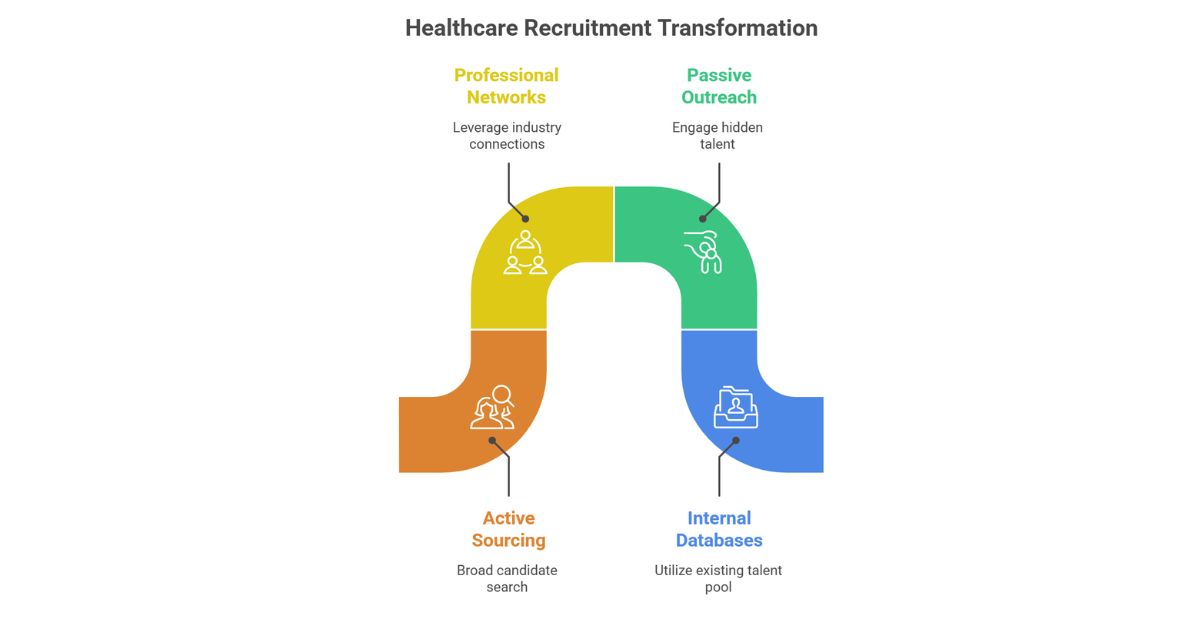
Many healthcare employers wonder what they actually receive for the recruitment fee.
A professional healthcare staffing agency provides much more than resume submissions.
Candidate Sourcing and Outreach
Recruiters actively search for candidates through:
- Healthcare job boards
- Professional networks
- Passive candidate outreach
- Internal talent databases
This process saves employers significant time.
Resume Screening and Interviewing
Recruiters review qualifications, conduct interviews, and evaluate cultural fit before presenting candidates.
This filters out unqualified applicants early.
License Verification and Credential Checks
Healthcare staffing agencies verify:
- State licenses
- Certifications
- Education
- Clinical experience
Credential accuracy is critical in healthcare recruitment.
Background Checks and Compliance Screening
Compliance screening protects healthcare organizations from risk.
This often includes:
- Criminal background checks
- Drug testing
- Employment verification
- OIG exclusion checks
Skills Assessments and Reference Checks
Agencies may conduct:
- Clinical assessments
- Behavioral interviews
- Professional reference checks
These steps improve candidate quality.
Salary Negotiation Assistance
Recruiters help manage salary discussions between employers and candidates.
This improves offer acceptance rates.
Onboarding Support
Many healthcare staffing agencies assist with:
- Documentation
- Orientation coordination
- Compliance paperwork
- Start-date preparation
This creates a smoother hiring experience.
Benefits of Using a Direct Hire Staffing Agency
Hiring healthcare professionals internally can feel like trying to fill a bucket with a hole in the bottom. The moment one position is filled, another vacancy appears. Direct hire staffing agencies help healthcare organizations create a more stable workforce while reducing the pressure on internal HR teams.
For hospitals, clinics, rehabilitation centers, and long-term care facilities, partnering with a healthcare staffing agency is often less about convenience and more about survival in a competitive hiring market.
Faster Hiring Process
One of the biggest advantages of using a direct hire staffing agency is speed.
Healthcare employers often struggle with:
- Long hiring cycles
- Resume overload
- Scheduling interviews
- Compliance verification delays
Meanwhile, open positions continue affecting operations.
A healthcare staffing agency already has access to talent pipelines filled with pre-screened candidates. Instead of starting from zero, recruiters begin searching immediately.
For example:
A hospital that takes 60 days to hire a Registered Nurse internally may reduce hiring time to 2–3 weeks with the help of a staffing agency.
Faster hiring means:
- Fewer staffing shortages
- Reduced overtime
- Better patient coverage
- Lower burnout rates
In healthcare, every unfilled shift affects both employees and patients.
Access to Pre-Screened Healthcare Talent
Healthcare recruitment requires more than finding available candidates. Employers need professionals who are:
- Licensed
- Experienced
- Reliable
- Credentialed
- Ready to work
Direct placement recruiters screen candidates before presenting them to employers.
This process often includes:
- Resume reviews
- Skills assessments
- Reference checks
- Background verification
- License validation
Instead of sorting through hundreds of applications, healthcare employers receive a shortlist of qualified candidates.
That saves time and improves hiring accuracy.
Reduced Hiring Risks
A poor hire in healthcare can create serious operational and compliance issues.
Bad hiring decisions may lead to:
- Increased turnover
- Poor patient care
- Staff conflicts
- Compliance violations
- Financial losses
Healthcare staffing agencies reduce hiring risks by carefully evaluating candidates before placement.
Experienced recruiters know how to identify:
- Red flags
- Skill gaps
- Credential problems
- Reliability concerns
This extra layer of screening acts like a safety net for healthcare employers.
Improved Employee Retention
Retention matters just as much as recruitment.
Constant turnover creates instability in healthcare environments. It affects team morale, increases burnout, and disrupts patient care continuity.
Direct hire staffing focuses on long-term compatibility rather than short-term placement.
Recruiters evaluate:
- Work culture fit
- Career goals
- Schedule preferences
- Communication style
- Long-term commitment
When employees feel aligned with the workplace, they are more likely to stay.
That reduces future hiring costs significantly.
Lower Internal Recruitment Burden
Internal HR teams already handle:
- Employee relations
- Payroll
- Compliance
- Benefits administration
- Scheduling
- Performance management
Adding complex healthcare recruitment responsibilities can overwhelm internal staff.
A healthcare staffing agency removes much of that burden.
Recruiters manage:
- Candidate sourcing
- Initial interviews
- Credential verification
- Outreach campaigns
- Screening processes
This allows HR teams to focus on operations instead of spending hours reviewing resumes.
Better Candidate Quality
Quality matters more than quantity in healthcare hiring.
One highly qualified nurse is more valuable than ten unverified applicants.
Healthcare staffing agencies often build long-term relationships with skilled healthcare professionals. Many passive candidates trust recruiters more than public job boards.
As a result, staffing agencies can access talent that employers may never find through traditional recruitment methods.
This improves:
- Candidate quality
- Hiring efficiency
- Placement success rates
Scalable Workforce Solutions for Healthcare Facilities
Healthcare hiring needs can change rapidly.
For example:
- Flu season increases staffing demand
- Patient volume spikes unexpectedly
- Employee resignations happen suddenly
- New facilities open quickly
Healthcare agencies provide scalable hiring support during growth periods.
Whether a facility needs:
- One caregiver
- Ten nurses
- Multiple therapists
- An entire clinical team
A staffing agency can adjust recruitment efforts accordingly.
That flexibility helps healthcare organizations stay prepared in unpredictable environments.
Why Healthcare Employers Choose Direct Hire Staffing Despite the Cost
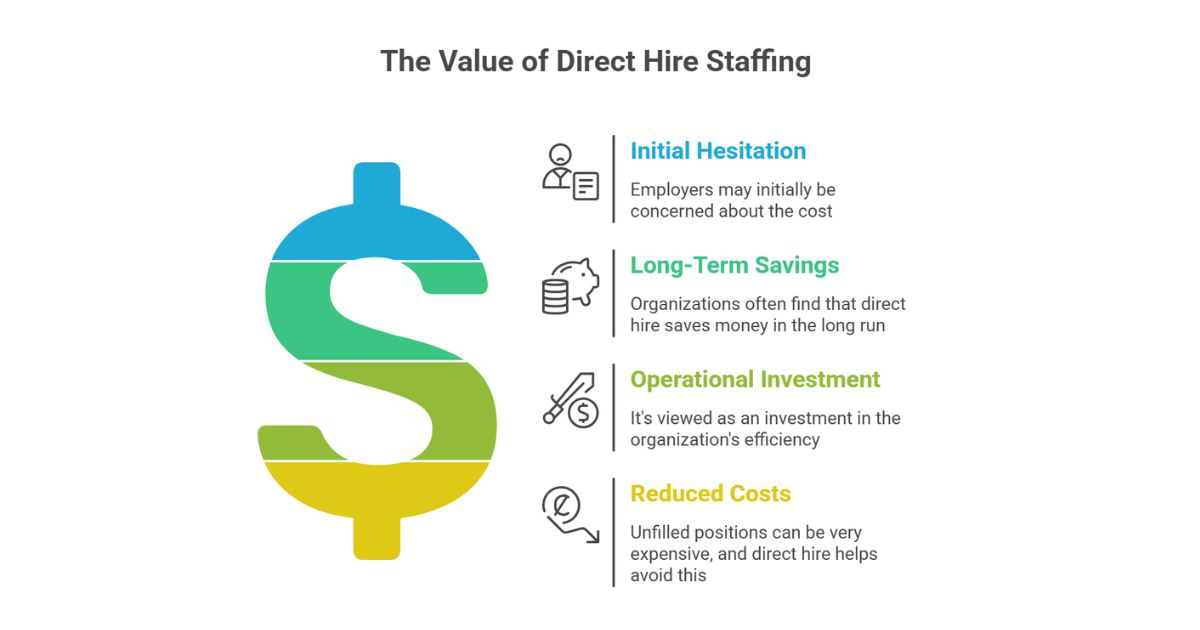
Some healthcare employers initially hesitate because direct hire staffing fees may seem expensive. However, most organizations quickly realize that unfilled positions often cost much more than recruitment fees.
Direct hire staffing is not simply a hiring expense. It is an operational investment.
Cost of Vacant Healthcare Positions
An empty healthcare position creates a ripple effect across the organization.
When hospitals operate short-staffed:
- Existing employees work overtime
- Burnout increases
- Productivity drops
- Patient wait times grow
- Care quality may suffer
For example:
An understaffed nursing unit can increase overtime costs within weeks. Those expenses may exceed the staffing agency fee quickly.
Vacancies also reduce operational efficiency and strain employee morale.
Reducing Staff Burnout and Overtime
Burnout remains one of the largest problems in healthcare today.
When facilities remain understaffed for long periods:
- Nurses become exhausted
- Turnover increases
- Sick leave rises
- Team morale declines
Direct hire staffing helps organizations stabilize workloads by filling permanent positions faster.
That reduces:
- Mandatory overtime
- Scheduling pressure
- Emotional exhaustion
Healthy staffing levels create healthier work environments.
Improving Patient Care Consistency
Consistent staffing improves patient outcomes.
Patients feel more comfortable when they interact with stable care teams instead of constantly rotating temporary staff.
Permanent healthcare employees:
- Build stronger patient relationships
- Understand workplace systems better
- Collaborate more effectively with teams
Direct hire staffing supports long-term continuity of care.
Long-Term Workforce Stability
Temporary staffing solves short-term problems. Direct hire staffing creates long-term workforce stability.
Permanent employees contribute to:
- Team development
- Leadership growth
- Organizational culture
- Operational consistency
Healthcare facilities with stable staffing often experience fewer disruptions and stronger patient satisfaction.
Reducing Employee Turnover Costs
Employee turnover is expensive.
Replacing healthcare workers requires:
- Advertising costs
- Recruiter time
- Training expenses
- Onboarding resources
- Productivity adjustments
High turnover also impacts employee morale.
Direct hire staffing agencies focus on placing candidates who are more likely to stay long term.
That reduces repeat hiring cycles and protects recruitment budgets.
Hidden Costs of Hiring Without a Staffing Agency

Some healthcare employers try to avoid staffing agency fees by handling recruitment internally. While this may appear cheaper upfront, hidden recruitment costs often become much larger over time.
Internal hiring costs can quietly drain both money and productivity.
Job Advertising Expenses
Healthcare job advertising is expensive, especially in competitive markets.
Employers often pay for:
- Premium job board listings
- Sponsored ads
- Recruitment marketing campaigns
- Social media hiring ads
Those expenses add up quickly without guaranteed hiring results.
Internal Recruiter Salaries
Internal healthcare recruiters require:
- Salaries
- Benefits
- Training
- Recruitment software
- Advertising budgets
For organizations with ongoing hiring needs, internal recruitment costs may exceed agency fees.
Time-to-Hire Delays
Every extra day a healthcare role stays vacant creates operational pressure.
Long hiring timelines can result in:
- Missed revenue
- Staff burnout
- Increased overtime
- Lower patient satisfaction
Healthcare staffing agencies often reduce time-to-fill significantly.
Productivity Losses from Staffing Gaps
Understaffed healthcare teams cannot operate at full efficiency.
Managers spend more time adjusting schedules and less time focusing on operations.
Existing staff may become overwhelmed, increasing the risk of errors and resignations.
Poor Hiring Decisions and Turnover Costs
Hiring the wrong candidate is expensive.
Bad hires often lead to:
- Repeated recruitment costs
- Training losses
- Compliance risks
- Operational disruptions
Healthcare staffing agencies reduce these risks through careful screening.
Compliance Risks in Healthcare Hiring
Healthcare hiring involves strict compliance requirements.
Missing credential issues or incomplete background checks can create:
- Legal risks
- Accreditation concerns
- Patient safety problems
Professional staffing agencies help employers stay compliant throughout the recruitment process.
Conclusion
So, how much do staffing agencies charge for direct hire?
In most cases, healthcare staffing agencies charge between 15% and 30% of a candidate’s first-year salary. While that may seem like a significant investment, the long-term value often outweighs the cost.
Direct hire staffing helps healthcare employers:
- Hire faster
- Reduce turnover
- Improve patient care
- Lower burnout
- Access qualified healthcare professionals
- Reduce recruitment risks
The true cost of healthcare hiring is not always the staffing agency fee. Often, the biggest expense comes from delayed hiring, poor placements, overtime, and workforce instability.
That is why many healthcare organizations partner with experienced agencies like Bluebix Health for reliable direct hire staffing solutions.
Whether you need Registered Nurses, caregivers, therapists, or specialized healthcare professionals, working with the right healthcare staffing partner can help your organization build a stronger and more stable workforce for the future.
FAQs
How negotiable are direct-hire staffing agency fees in healthcare recruitment?
Many staffing agencies are open to negotiating fees based on hiring volume, long-term partnerships, exclusivity agreements, and the type of healthcare role. Facilities hiring multiple nurses or caregivers may secure lower percentage rates compared to one-time placements.
Do staffing agencies charge differently for travel nurses versus permanent nurses?
Yes. Travel nurse staffing usually follows bill-rate or hourly markup models, while permanent nurse placements typically involve a one-time direct hire fee based on annual salary. The pricing structure depends on employment type and contract duration.
Can direct hire staffing reduce employee turnover in healthcare facilities?
Direct hire staffing often improves retention because agencies focus on long-term cultural fit, qualifications, and candidate reliability. Better hiring matches help reduce burnout, resignation rates, and repeated recruitment cycles for healthcare employers.
What happens if a direct hire candidate quits shortly after being hired?
Most reputable staffing agencies provide replacement guarantees within a set timeframe. Depending on the agreement, employers may receive a replacement candidate or partial fee refund if the employee leaves early.
Are direct hire staffing fees tax-deductible for healthcare businesses?
In many cases, recruitment and staffing expenses may qualify as operational business expenses. However, healthcare organizations should consult financial or tax professionals to understand how staffing costs apply to their specific situation.
Why do specialized healthcare roles cost more to recruit?
Positions like ICU nurses, physicians, therapists, and surgical specialists are harder to fill because of licensing requirements, limited talent availability, and high competition among healthcare employers, increasing recruitment complexity and cost.
How long does direct hire healthcare recruitment usually take?
Hiring timelines vary based on role complexity and candidate availability. Some healthcare positions may be filled within days, while specialized or leadership roles can take several weeks due to credential verification and interviews.
Do healthcare staffing agencies help with onboarding and compliance?
Many healthcare staffing agencies assist with credentialing, background checks, license verification, onboarding coordination, and compliance documentation to help healthcare employers simplify the hiring process.
Is direct hire staffing more cost-effective than internal recruiting?
For many healthcare facilities, direct hire staffing reduces internal workload, advertising expenses, overtime costs, and vacancy-related disruptions. The long-term value often outweighs the upfront recruitment fee.
What should healthcare employers ask before signing a staffing agreement?
Healthcare employers should ask about fee structure, replacement guarantees, candidate screening methods, credentialing processes, communication timelines, compliance support, and experience filling similar healthcare positions.