How Healthcare Employers Find Nurses
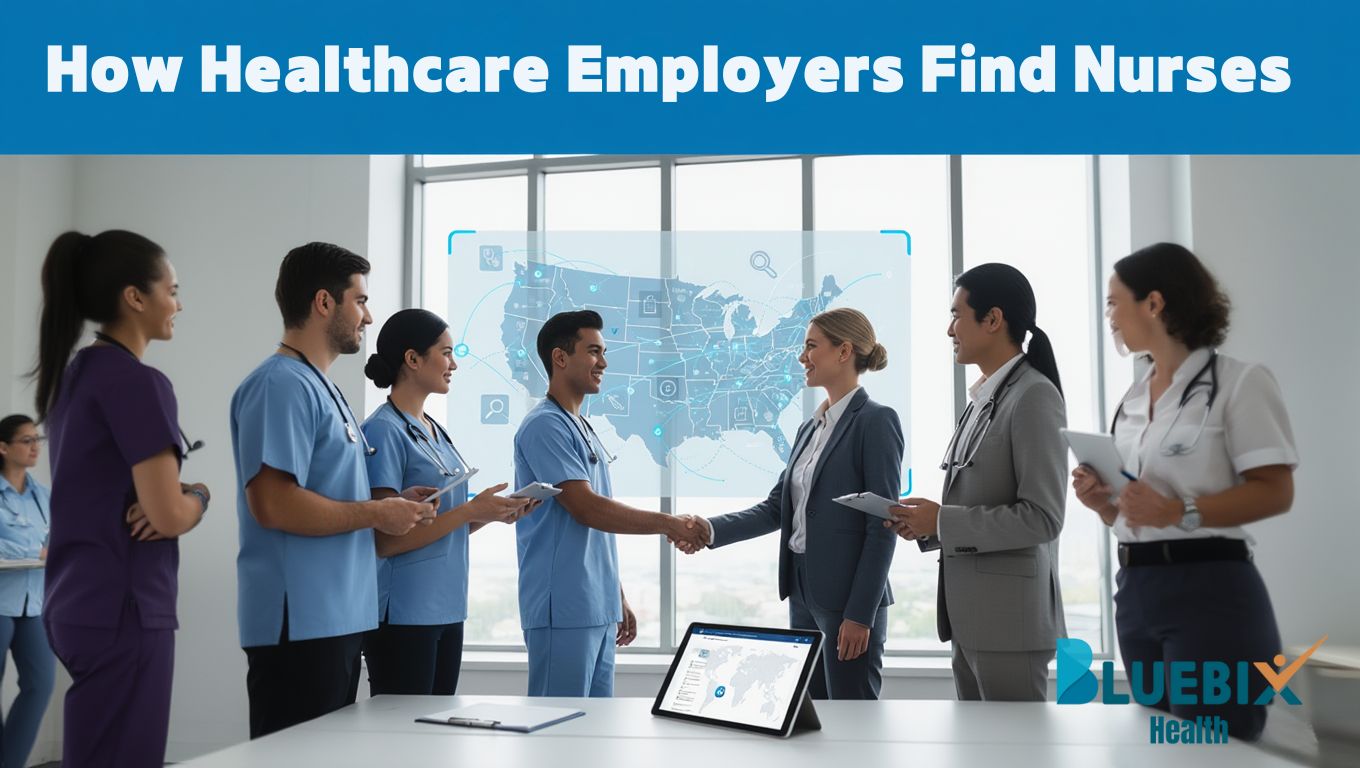
If you’re reading this, you probably don’t want a lecture about the nursing shortage. You want nurses on the schedule qualified, verified, and ready without chaos, ghosting, or 83-day hiring cycles. And yes, the reality is tough: national benchmarks show it can take around 83 days to hire an experienced RN, depending on specialty.
This guide explains how healthcare employers find nurses today, why common methods fail, and what to do instead. You’ll get clear channels, a step-by-step hiring system, and practical scripts. No fluff, just a smooth path from open role to start date.
What Healthcare Employers Really Mean by Find Nurses
When someone says, We need to find nurses, they usually mean one of three things:
- Fill shifts now (to avoid overtime, closures, or unsafe staffing).
- Build a pipeline (so hiring stops feeling like an emergency).
- Improve quality (licensed, specialty-fit, reliable nurses who actually show up).
Find isn’t just sourcing. It includes screening, licensing, credentialing, scheduling, and follow-through. It’s like saying you want to get groceries, when what you really need is: pick a store, find good food, pay quickly, bring it home, and cook it before it spoils.
2.1 Hiring goals by facility type: hospital vs LTC vs home health
Hospitals often need specialty nurses (ICU, ER, OR, L&D) and care about unit fit, acuity experience, and patient safety indicators. LTC/rehab needs steady staffing, strong attendance, and comfort with long-term relationships and documentation. Home health needs independence, route efficiency, and communication skills, because the nurse is often the whole team in the field.
Same job title. Different reality. If you don’t define your setting clearly, you’ll attract the wrong applicants and waste time.
2.2 Urgent needs vs. planned hiring: why strategies differ
Urgent needs are about speed and readiness. Your best tools are: internal float pools, reactivation of past candidates, staffing partners, and fast screening. Planned hiring is about pipeline and brand: school partnerships, referral programs, content recruiting, and improving your candidate experience.
Trying to solve an urgent vacancy with a long-term pipeline tactic is like trying to put out a kitchen fire by planting a tree. Both are useful, just not at the same moment.
2.3 Quality signals employers want: license, specialty fit, reliability
Most employers want good nurses, but what they really mean is:
- Current license (and no surprises on verification)
- Specialty match (skills aligned to unit and patient mix)
- Reliability (attendance, teamwork, follow-through)
- Professional communication (clear charting, safe escalation)
- Shift fit (nights/weekends/rotation expectations)
The key: quality is not only clinical skill. It’s predictability. Hiring managers love nurses who are stable, clear, and prepared.
Where Healthcare Employers Find Nurses Today: The Main Channels
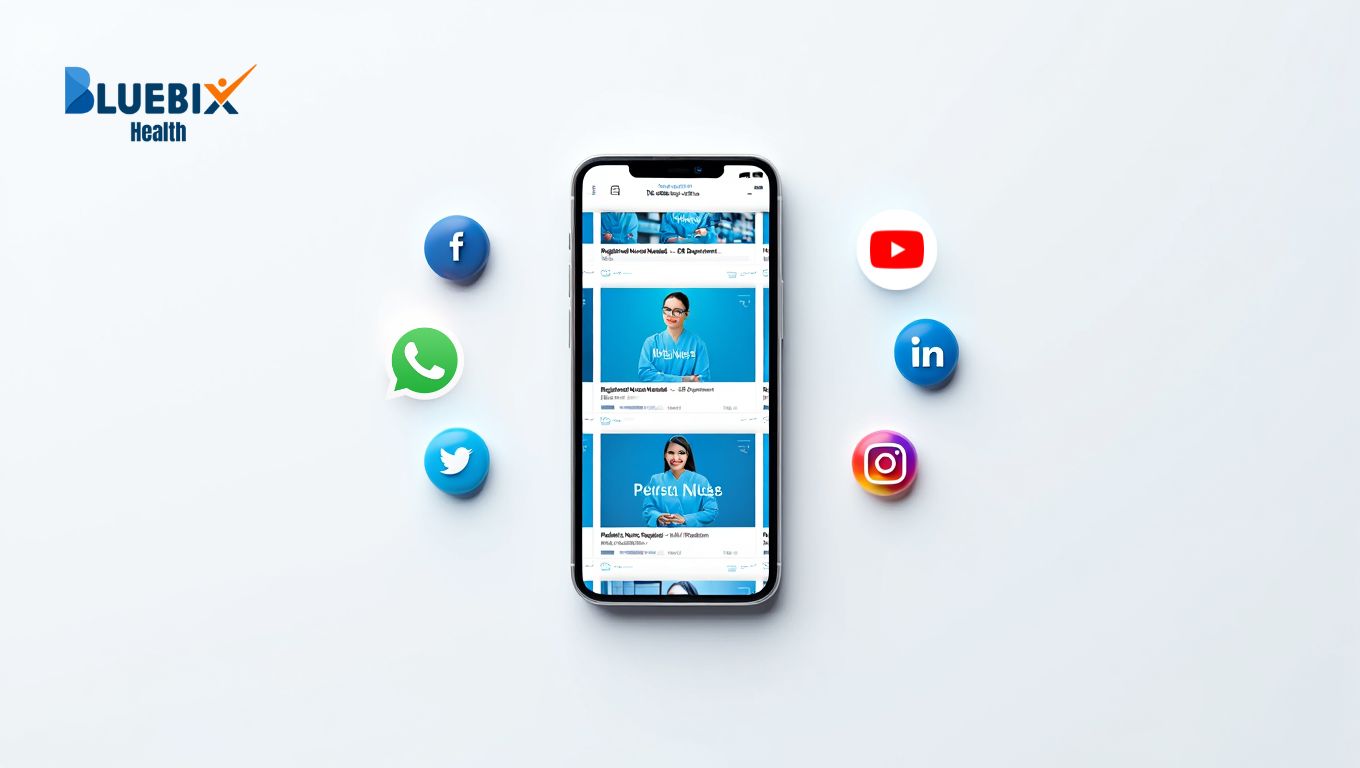
Healthcare employers find nurses through a mix of owned channels (your internal assets) and rented channels (platforms and partners). The best strategy is not picking one; it’s building a multi-lane highway, so if one lane slows down, your hiring doesn’t stop.
3.1 Internal referrals and alumni networks: fastest quality hires
Referrals are often the highest-trust channel. Why? Your team won’t refer someone who makes them look bad. Start simple:
- A clear referral bonus policy (and pay it fast)
- Hard-to-fill referral boosts (extra for nights/weekends/specialty)
- A boomerang list (former employees who left on good terms)
Practical tip: Run a monthly Referral Sprint. One email to staff: We’re hiring Med-Surg nights. Here’s the pay range, schedule, and who to text. Give them a direct line, not a complicated portal.
3.2 Hospital career pages and ATS rediscovery: hidden candidates
Your ATS is often your biggest untapped database. Many nurses applied once, got busy, and never heard back. Some are still interested if you reach out like a human.
Do this quarterly:
- Search past applicants by specialty and license type
- Re-engage with a short message and a simple next step
- Offer quick screening windows (10-minute call today/tomorrow)
Even if only a small percentage responds, it’s cheap, fast, and high-intent, because they already raised their hand once.
3.3 Job boards: Indeed, niche nursing boards, and what actually works
Job boards can work, but only when the posting is sharp and the process is fast. A nurse sees dozens of listings. If yours looks vague, they scroll.
What works best on job boards:
- Pay range + differentials up front
- Clear unit/specialty and shift details
- Apply in 60 seconds (or as close as possible)
- Fast follow-up (same day when possible)
Job boards are like fishing in a busy lake. You can catch fish, but only if your bait is specific and you reel in quickly.
3.4 LinkedIn and social recruiting: reaching passive nurses
Passive nurses aren’t hunting, they’re listening. They might switch jobs if the offer feels safer, kinder, or more stable.
Use LinkedIn/social for:
- Unit spotlights (What it’s like working nights in our ER)
- Short videos from nurse leaders (Here’s how we support new hires)
- Hiring posts with a direct contact method (text/email)
- Ask me anything sessions for candidates
This builds trust before the application. Trust is currency in nurse recruiting.
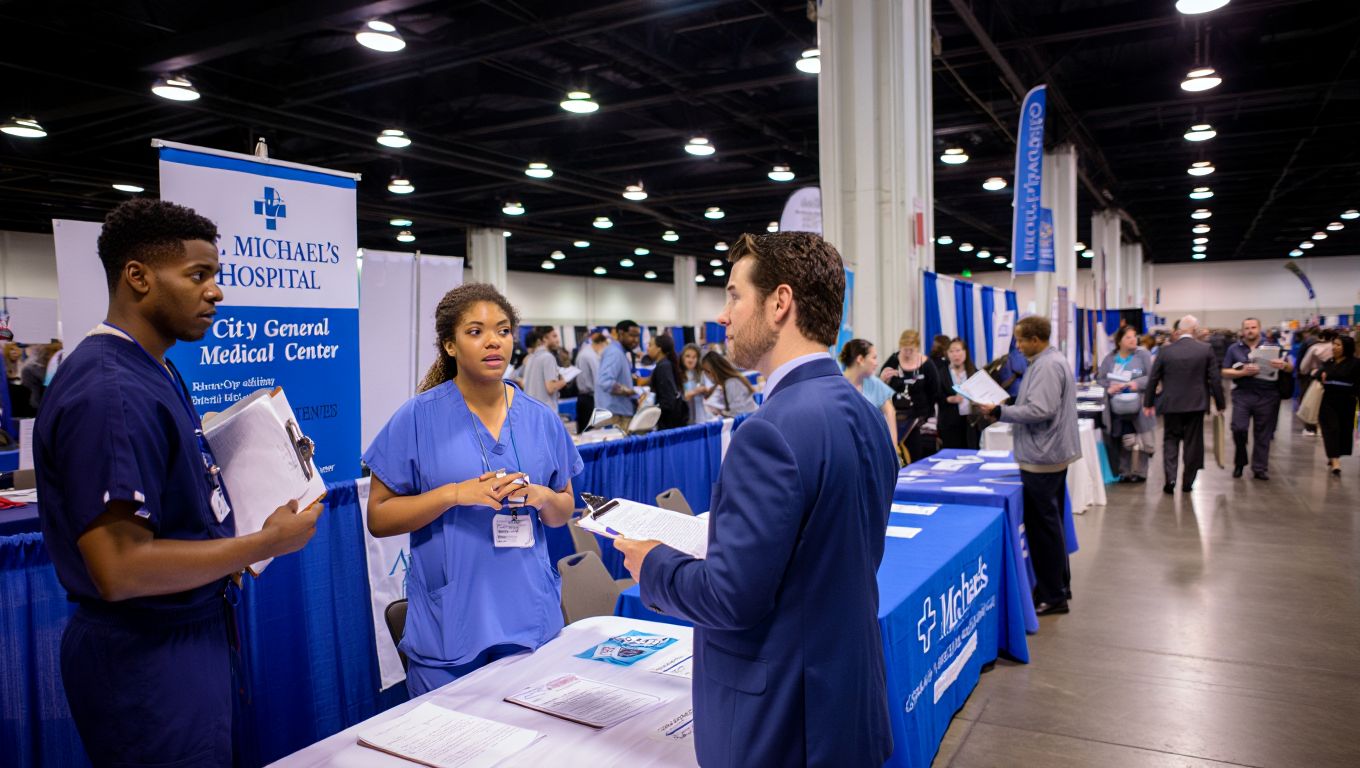
3.5 Local partnerships: nursing schools, residency programs, associations
If you want steady, long-term hiring, build local relationships:
- Nursing schools (clinical rotations + early offers)
- Residency programs (strong onboarding attracts new grads)
- Professional associations and local events
- Community colleges for LPN/LVN pipelines
Even better: align with the school calendar. Don’t show up when graduation already happened. Pipeline hiring is seasonal.
3.6 Healthcare staffing agencies: when speed and volume matter
Staffing partners are often the best answer when you need:
- Surge coverage
- Hard-to-fill roles
- New facility launches
- Quick backfills after resignations or leave
Benchmarks show nurse hiring can stretch close to three months in many settings and specialties, so when you need a faster bridge, staffing becomes a practical lever.
A good partner reduces admin load, screens for fit, and keeps communication flowing, so your team doesn’t drown in scheduling, chasing documents, and repeat interviews.
Why Employers Struggle to Find Nurses Even When They Post Jobs

Posting jobs is not the same as hiring. Many employers post and hope, then wonder why the candidate pipeline is thin or of low quality.
Here are the most common blockers and how they quietly kill your hiring.
4.1 Competing offers and pay transparency: the speed of response problem
Nurses move fast. If you take a week to respond, you lose them. Industry benchmarks highlight long time-to-fill cycles for experienced RNs.
Also, pay transparency has changed expectations. Even when you can’t offer the highest base pay, you can compete with:d
- differentials
- schedule stability
- strong onboarding
- better ratios/support
- respectful leadership
But you must communicate these clearly and early.
4.2 Generic job descriptions that repel candidates
A generic post reads like this:
Seeking a motivated RN. Must be a team player. Competitive pay.
That tells a nurse almost nothing. Nurses want specifics: unit, ratios, schedule, support, and what a tough shift looks like. When your post is vague, nurses assume the worst because they’ve learned to.
4.3 Credentialing delays: licensure, background checks, immunization records
Credentialing is necessary, but slow credentialing loses candidates. The fix is not cutting corners. It’s running steps in parallel:
- verify license early
- Start background checks quickly
- Use a clear doc checklist
- communicate timing like a project manager
Licensure is also a pipeline issue: the NCLEX is a key gate in the licensure process, and national data tracks pass rates as a signal of new nurse supply.
4.4 Shift friction: nights/weekends/float pools and burnout concerns
Many roles are hard to fill because of shift pain:
- rotating weekends
- nights without support
- floating without training
- short staffing that makes every shift feel like a storm
You can’t market your way out of a broken shift experience. But you can reduce friction by being honest and offering support: training, preceptors, and clear float expectations.
4.5 Bad candidate experience: slow callbacks, unclear steps, poor communication
A bad candidate experience usually looks like:
- no reply for days
- Repeated requests for the same documents
- unclear interview steps
- No one answers questions
- silence after interviews
Nurses interpret silence as disrespect or disorganization. Either way, they walk.
How to Find Nurses Faster: A Step-by-Step Hiring System

Here’s the system most healthcare employers need: clarity + speed + trust. The goal is to shorten time-to-first-response and time-to-offer, because long hiring cycles are common in RN recruitment.
5.1 Define the role precisely: unit, ratios, shift pattern, must-haves
Write a one-page Role Reality Sheet:
- Unit + patient mix
- Ratios (typical and worst-case)
- Shift and weekend rules
- Must-have certifications
- EHR used
- Start date target
If you can’t describe the job clearly, you can’t recruit for it.
5.2 Write a nurse-first job post: what nurses look for (pay, schedule, support)
A nurse-first post answers:
- What will my schedule be?
- Will I be supported or thrown in?
- What’s the pay range and differentials?
- Who will I work with?
- What makes this place better than the next one?
Keep it direct. Think of your job post like a menu. If it hides the price and ingredients, people don’t order.
5.3 Build a 72-hour hiring sprint: screening → interview → offer
A simple 72-hour sprint can beat long time-to-fill norms by removing delays:
Day 1:
- same-day screening (10–15 minutes)
- send role sheet + pay range
- Schedule an interview within 24 hours
Day 2:
- structured interview
- quick skills validation
- same-day decision (yes/no/maybe)
Day 3:
- conditional offer
- Start credentialing steps immediately
- confirm start-date window
Speed doesn’t mean reckless. It means organized.
5.4 Use speed + trust messaging: how to attract quality applicants
Your messaging should say:
- We move fast.
- We verify properly.
- We respect your time.
Example line: We do same-day screening and clear next steps. No guessing.
That’s a trust signal.
5.5 Pre-credentialing checklist to reduce drop-offs
Send a single checklist right after screening:
- license verification steps
- background check timeline
- immunization/titers requirements
- BLS/ACLS proof
- ID and work eligibility
- references
When candidates know what’s coming, they don’t panic and vanish.
5.6 Create a candidate communication workflow: SMS/email + clear milestones
Communication is your secret weapon. Many employers lose candidates in the gap between interest and start date. Fix the gaps with a simple workflow.
Milestone 1: Application received (within 1–2 hours)
Text: Thanks for applying. I’m Name. Can you do a 10-minute call today? Reply 1 for 2 pm, 2 for 4 pm, or send your best time.
Milestone 2: After screening (same day)
Email summary:
- pay range + differentials
- schedule basics
- next step + time options
- doc checklist link/attachment
Milestone 3: Interview confirmation (24 hours before)
Text: Reminder: interview tomorrow at 10 am with the manager. Here’s the link/address. Reply YES to confirm.
Milestone 4: Post-interview update (same day)
Text: Thanks for meeting us. We’ll confirm next steps by 5 pm today.
Then do it, even if the answer is still undecided.
Milestone 5: Offer + preboarding (within 24 hours)
Offer email should include:
- start date window
- orientation plan
- who their point of contact is
- What documents are needed and due dates
Milestone 6: Start-date protection (weekly check-ins)
A short check-in reduces rescinds:
- Any questions?
- Any schedule conflicts?
- Are you stuck on paperwork?
This is simple, but powerful. It turns hiring into a guided process, not a guessing game.
5.7 Offer strategy: signing bonuses, differentials, relocation, flexible scheduling
Don’t rely only on base pay. Build a clean offer package:
- Shift differentials are clearly stated
- weekend program options
- sign-on bonus terms (simple, fair)
- relocation support if applicable
- flexible start dates where possible
The best offer feels clear and safe, not tricky.
Best Practices for Finding Verified, High-Quality Nurses
Speed is great. Bad hires are expensive. So the goal is not just hiring fast, it’s hiring right.
6.1 Verification that matters: license validation, specialty proof, skills check
Verification should be practical:
- confirm active license early
- validate specialty experience with targeted questions
- skills check aligned to unit realities
- confirm certifications (BLS/ACLS, etc.)
Hiring is like building a bridge. You don’t test every bolt forever, but you also don’t skip the structural checks.
6.2 Behavioral screening for reliability: attendance, teamwork, patient safety
Ask behavioral questions that reveal reliability:
- Tell me about a time you handled an unsafe situation.
- How do you respond when the unit is short?
- What do your coworkers rely on you for?
Listen for ownership, clarity, and calm thinking.
6.3 Reference checks that reveal performance (templates + red flags)
Use a simple reference template:
- role and dates
- attendance reliability (yes/no + context)
- teamwork rating
- patient safety concerns (if any)
- Would they rehire?
Red flags: vague answers, long pauses, eligible for rehire, but no enthusiasm.
6.4 Preventing no-shows and early quits: expectations + onboarding clarity
Many early quits happen because expectations were fuzzy.
Prevent it by sharing:
- First-week schedule
- Who their preceptor is
- How floating works
- What success looks like in 30 days
- Who to contact when overwhelmed
Retention matters because turnover is costly. One national retention report estimates the cost of each RN turnover at over $61,000 and shows meaningful first-year turnover rates.
Benefits of Using a Healthcare Staffing Partner (and When It’s the Best Choice)

A staffing partner isn’t just more resumes. At its best, it’s a speed-and-trust engine that reduces overload on your HR and nurse managers, especially in a market where RN time-to-fill can be long.
7.1 When staffing agencies win: surge hiring, hard-to-fill shifts, new facility launch
Staffing partners shine when:
- You have urgent holes in schedules
- Specialty roles sit open too long
- seasonal spikes hit (flu season, census changes)
- A new unit/facility needs staffing fast
- Internal recruiters are at capacity
Think of staffing like a generator. When the power grid (your pipeline) can’t handle the load, a generator keeps essential systems running.
7.2 Speed-to-fill vs. cost: how to evaluate ROI (time, overtime, patient impact)
Cost isn’t just the hourly rate. It’s the total impact:
- overtime and burnout
- manager time spent interviewing weak candidates
- bed closures or reduced capacity
- patient experience and safety risks
Research continues to examine how staffing levels, overtime, and turnover connect to outcomes for travel nurses and hospitals.
Also, some workforce reports provide concrete cost comparisons between employed and travel/agency approaches.
A simple ROI question: What does one unfilled RN slot cost us per week in overtime, stress, and lost capacity? Put a number on it. Decisions get clearer fast.
7.3 What verified candidates should include (credentials, compliance, readiness)
If a partner says verified, ask what that means. At minimum, you want:
- license validation
- certifications confirmed
- Background screening process explained
- skills matching to unit needs
- compliance readiness checklist
- clear availability and start timeline
Verification is only real when it’s documented.
7.4 How a staffing partner improves communication and reduces admin load
A strong partner should:
- present shortlists, not huge piles
- pre-screen for schedule fit
- coordinate interview times
- keep candidates warm (so they don’t ghost)
- Help gather documents and readiness items
This matters because your internal team is already busy. Many hospitals report top staffing and recruitment pressures and long time-to-fill cycles.
7.5 What to expect in a smooth recruitment experience (SLAs, updates, shortlists)
Ask for simple service standards:
- response time to a request
- time to first shortlist
- update cadence (daily/48 hours)
- replacement policy terms
- single point of contact
Smooth hiring feels like a guided trip: you know where you are, what’s next, and who is driving.
How to Choose the Right Nurse Hiring Solution (Decision Framework)
You don’t need 10 vendors. You need the right mix: internal + platforms + partner support.
8.1 Scorecard: speed, quality, compliance, and candidate experience
Use a simple 4-part scorecard (rate 1–5):
- Speed: time-to-first-response, time-to-interview, time-to-offer
- Quality: specialty match, retention risk, performance indicators
- Compliance: verification steps, documentation, audit readiness
- Candidate experience: clarity, communication, reduced friction
If one option is fast but messy, it may cost you more later.
8.2 Questions to ask vendors/agencies: screening, verification, replacement policy
Ask directly:
- How do you verify licenses and certifications?
- What screening steps happen before you present candidates?
- How do you confirm schedule fit and availability?
- What is your replacement policy if it doesn’t work out?
- How often will you update us?
If they can’t answer cleanly, it’s a warning sign.
8.3 Common mistakes: choosing based only on cheap or fast.
Cheap can become expensive when hires quit early. Fast can become dangerous when verification is weak. A good solution balances speed and trust, because patient care doesn’t forgive sloppy hiring.
8.4 Service-level expectations: response time, shortlist time, interview coordination
Write expectations down:
- Shortlist within X days.
- Daily updates for urgent roles.
- Interview scheduling handled by partner.
When expectations are clear, performance improves.
Nurse Recruitment Marketing: Get More Applicants Without Lowering Standards
Recruitment marketing is not pretty posts. It’s reducing fear and friction so qualified nurses take action.
9.1 Employer brand basics: what nurses want to feel before applying
Before a nurse applies, they want to feel:
- safe (support, ratios, leadership)
- respected (pay clarity, honest scheduling)
- seen (unit culture, real people, real expectations)
- confident (clear onboarding and training)
If your brand feels like a mystery box, nurses assume the worst. Instead, show reality: orientation, preceptors, teamwork, and how you handle tough shifts.
9.2 Landing pages and one-click apply: reduce friction
Make applying easy:
- mobile-friendly apply
- fewer steps
- clear pay range and schedule
- direct contact method (Tips recruiting)
- FAQ about onboarding and credentialing
Every extra click is a leak in your hiring funnel.
9.3 Retargeting and remarketing: bringing back interested candidates
Many nurses don’t apply on the first visit. They compare options, talk to family, and wait for a day off.
Retargeting (ads/email/social) works best when it answers doubts:
- What’s the schedule?
- How fast is the process?
- Who will support me?
You’re not chasing them; you’re giving them the missing piece to decide.
9.4 Content that attracts nurses: shift guides, unit spotlights, day-in-the-life
High-performing content ideas:
- A day in our ICU (real schedule + support)
- How our night shift is staffed.
- Meet the nurse manager: what I expect and what I protect.
- Orientation roadmap: week 1 to week 6.
This content is your silent recruiter.
Metrics That Prove You’re Finding Nurses More Efficiently
If you don’t measure, you can’t improve. Use metrics that match the real hiring bottlenecks.
10.1 Time-to-first-response and time-to-offer
Track:
- time from application to first contact
- time from first contact to offer
When you cut these times, you reduce ghosting and improve acceptance rates, especially in markets where overall time-to-fill can be long.
10.2 Qualified applicant rate and interview-to-offer ratio
Measure quality early:
- % of applicants who meet must-haves
- interview-to-offer ratio
If you interview 10 to hire 1, your targeting and screening need improvement.
10.3 Drop-off points: where candidates disappear and why
Common drop-offs:
- after application (slow response)
- after interview (no update)
- during credentialing (confusing paperwork)
- before start date (rescinded offers)
Fix the biggest leak first. That’s the fastest win.
Conclusion: A Faster, More Reliable Way to Find Nurses
Healthcare employers find nurses when they stop relying on one channel and start running a clear system: define the role, communicate fast, verify smart, and guide candidates step by step.
The market is competitive, and benchmarks show experienced RN hiring can take weeks to months, depending on specialty. That’s why the winners don’t “post and hope. They build pipelines, run hiring sprints, and protect candidate experience like it’s patient safety—because it is.
Talk to BlueBix Health for verified nurse candidates and fast shortlists
If your team needs speed, trust, verified candidates, and easy communication, BlueBix Health can help you shorten the distance between an open role and a nurse on the floor. Whether you’re backfilling urgent shifts or building a steady pipeline, the goal stays the same: more qualified applicants, less hiring friction, better staffing outcomes.
FAQ
- How do employers attract nurses without raising base pay?
Nurses often respond to predictable schedules, shift differentials, sign-on bonuses, childcare support, tuition reimbursement, and better staffing ratios. Highlight manager support, onboarding quality, and growth pathways. If you can’t raise base pay, compete on “total job quality” and fast, respectful communication. - What’s the #1 reason nurse applicants ghost employers?
Silence and slow processes. When candidates wait days for updates, they accept other offers. Reduce ghosting by responding within hours, sending a clear timeline, confirming interview logistics by text, and sharing next steps immediately after each stage. Speed signals seriousness and respect. - How can HR verify a nurse quickly without delaying offers?
Run parallel steps. Verify license and basic eligibility upfront, issue a conditional offer, and complete deeper checks (references, immunizations, background) within a defined window. Use a standardized pre-credentialing checklist and assign one coordinator to keep documents moving and candidates informed. - Should employers hire travel nurses, per diem, or full-time first?
Start with your urgency. For immediate coverage gaps, travel/per diem can stabilize shifts fast. For long-term stability and lower churn, prioritize full-time hires and build an internal float pool. Many employers use a blended model: stabilize today, then convert to permanent hiring. - What makes a nurse job description “high-converting”?
Clarity and honesty. Include unit, ratios, shift pattern, pay range, differentials, weekend requirements, EHR, and required certifications. Add what support looks like: orientation length, preceptor availability, and manager style. Nurses apply when they can picture the real job. - How do employers find specialty nurses like ICU, OR, or L&D faster?
Target where specialty nurses already gather: specialty associations, alumni groups, referral bonuses inside units, and niche job boards. Use highly specific posts (skills, devices, cases) and fast interview scheduling. Staffing partners can help by pre-vetting specialties and readiness. - How do you reduce early turnover after hiring nurses?
Match expectations early. Share real schedules, workload, and support resources before offer acceptance. Provide structured onboarding, consistent preceptorship, and 30/60/90-day check-ins. Many early quits happen due to surprise assignments or poor communication—solve those before day one. - What’s the best way to rebuild a nurse pipeline after months of low applicants?
Audit your funnel: apply flow, response time, interview availability, and offer speed. Refresh job posts with pay transparency and nurse-first details. Relaunch referrals, reactivate past candidates in your ATS, and run weekly hiring sprints. Consistency beats one-time posting bursts. - When does it make sense to use a healthcare staffing agency?
When you need speed, verified candidates, and less admin burden—especially for urgent shifts, hard-to-fill roles, or seasonal surges. The right partner should deliver pre-screened shortlists, manage communication, and support credentialing so your team can focus on selection and onboarding. - How can employers improve nurse candidate experience without adding more HR staff?
Automate what’s repeatable: instant confirmations, interview reminders, document checklists, and status updates. Use templates, text-first communication, and a single “candidate concierge” inbox. A staffing partner can also take over sourcing and pre-screening while you focus on final interviews.